.webp)




.svg)


Deal velocity is getting hit from pretty much every angle right now.
Buyers are taking longer. Committees keep getting bigger. Security and procurement show up earlier than you’d expect. And most sales teams are being told to do more with fewer people, which is... yeah, not super fun.
So the old way of “just do more calls” doesn’t really work anymore. You can try, but it only gets you so far.
{{heading-cta-text}}
What actually works now is seeing what is really happening inside your deals, in the real conversations, and then acting on that fast. Like, reacting quickly instead of guessing.
That is exactly what AI conversation intelligence helps you do.
What AI conversation intelligence is (and how it works in sales)
But first understand what it’s not
AI conversation intelligence is not just call recording.
Recording is passive. It just kind of sits there. CI is actually tied to:
- Deal stage changes
- Win-loss signals
- Deal progression tracking
- Risk alerts and coaching workflows
- Context of what is being said and when it was said in the sales cycle
If your tool only stores calls in a folder somewhere, you still have to do all the hard work yourself. Manually. Real CI connects the conversation to the pipeline so it actually, like, does something for you.
In simple terms
AI conversation intelligence (CI) is software that records sales calls, transcribes them, summarizes them, and analyzes what was said so you can get actionable deal insights and coaching insights.
In more plain terms, it turns messy call recordings into structured data you can actually use.
The actual "engine” behind it
Most CI tools combine a few things:
- Natural Language Processing (NLP) to understand language in transcripts
- Machine learning to find patterns across lots of calls and outcomes
- Sentiment analysis to detect shifts in tone (confidence, hesitation, frustration)
- Keyword and topic detection to track things like pricing, competitors, security, timelines
- Predictive signals that can support better deal health and forecasting accuracy
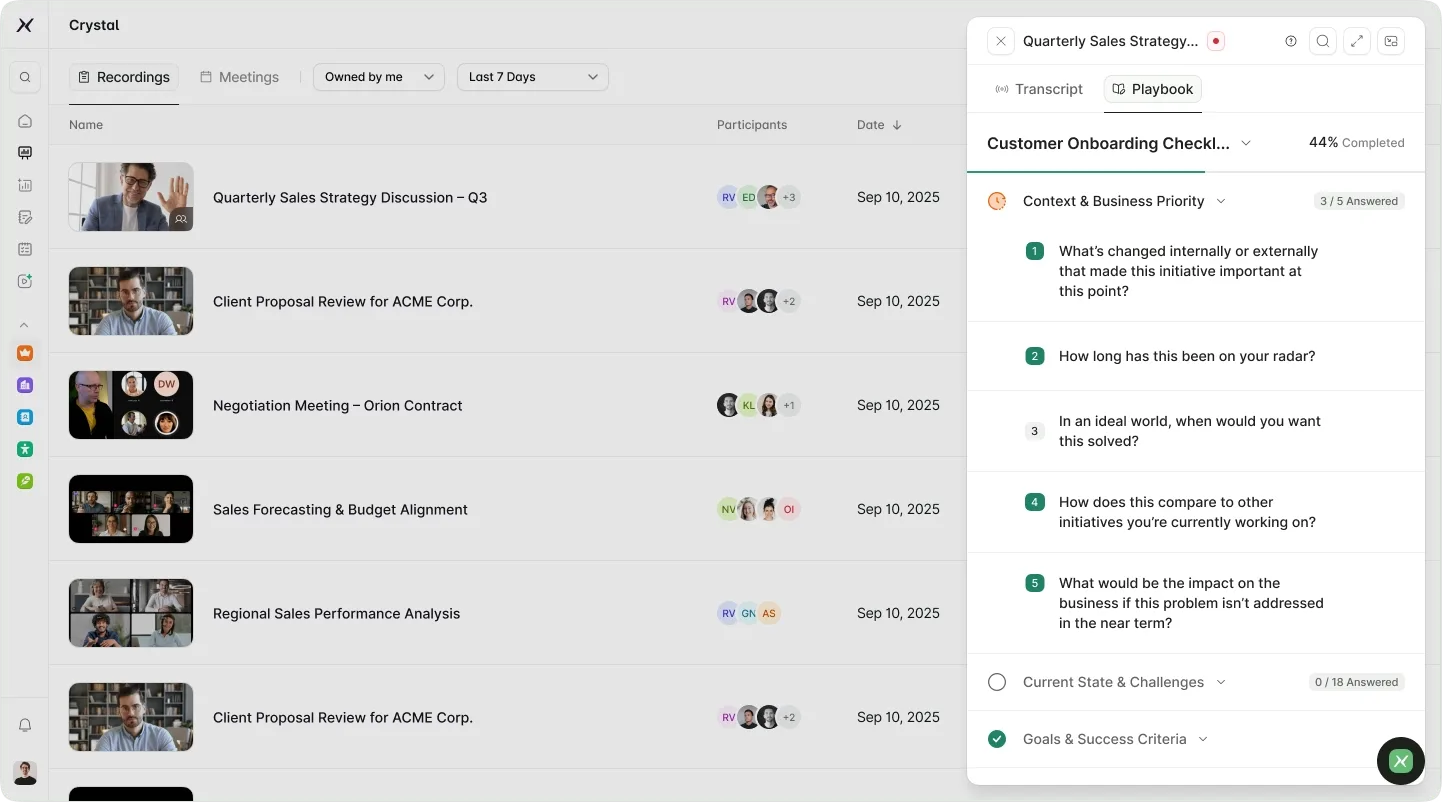
You don’t really need any technical skills to get value from this. The tool basically learns what “good” and “bad” deals sound like, so it helps you notice them earlier.
Using AI conversation intelligence tool can seriously boost your sales forecasting accuracy, so you can make more data-driven decisions instead of just going with your gut. Which, honestly, is kinda necessary in today’s tough sales environment where deal velocity is under a lot of pressure.
{{free-resources}}
What Typically Happens After a Call (The Workflow)
Most teams use CI like this:
- Call recording integration (Zoom, Dialpad, Aircall, Google Meet, etc.)
- Transcription within minutes in your dashboard
- Summarization (generative AI creates clean notes, key moments, next steps)
- Call scoring and scorecards (did we cover discovery? stakeholders? next step?)
- CRM automation (push notes, stakeholders, objections, next step into HubSpot/Salesforce)
- Dashboards and alerts (deal risk, stage aging, objection trends, rep coaching queues)
This is where deal velocity improves. Not because you have “better notes”, but because the system catches slow-down signals before they become a lost quarter.
These are the 5 conversation signals that move deals faster
Deals really start to move faster when conversations hit the right signals at the right time.
The problem is, most teams just cannot see the patterns across hundreds of calls. They kind of rely on rep notes and gut feel, which is, yeah, not super reliable.
CI changes that. It lets you search, filter, and track what buyers are saying across the pipeline.
Here are five signals that consistently move deals forward faster.
1) Buyer intent signal
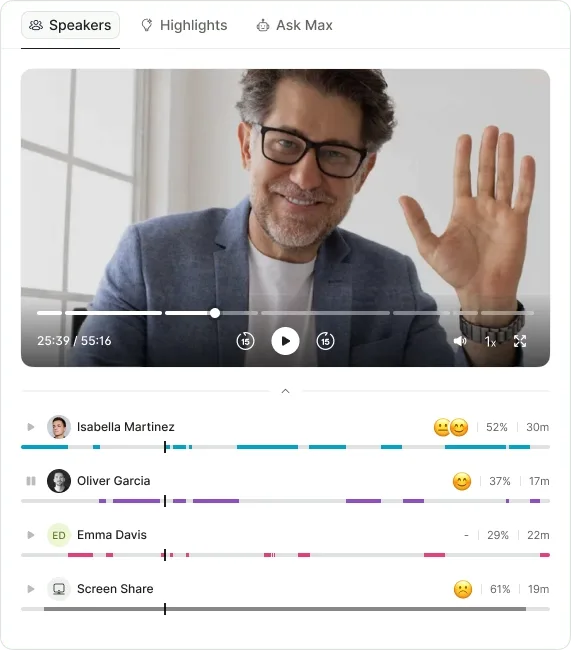
Intent is not just “they said they like it.”
Real intent kinda shows up in the actual words people use, stuff like:
- Clear pain and cost of inaction (“this is breaking our process”, “we are losing time every week”)
- Timeline words (“this quarter”, “before renewal”, “in the next 30 days”)
- Budget language (“we have budget”, “we need a business case”, “send pricing”)
- Internal champion behavior (“I can bring in my VP”, “I will drive this internally”)
With CI, you can search across calls for these patterns and connect them to outcomes.
So like, if your closed-won deals almost always include quantified pain by the end of discovery, you can literally score for that and coach people toward it.
This is one reason AI-assisted sellers usually handle more deals without losing control. The tool helps them focus on the deals that actually sound real.
2) Objection handling signal
Objections aren’t actually bad. What’s bad is when you just don’t handle them.
CI tools pick up on stuff like pricing pushback, security concerns, competitor mentions, integration worries, and that whole “build vs buy” question that always comes up.
From there, you look at what actually works in real calls by studying how your top reps handle pricing and other stuff, and then you turn that into repeatable talk tracks. Basically a reality-based playbook you can reuse.
Some effective tactics include:
- Building value before price: tying the cost to real problems and actual outcomes
- Justifying price: framing it around ROI, risk reduction, time saved
- Clear tradeoffs: “Remove X to lower price but lose Y outcome”
So CI kind of stops all the random guessing and instead helps you repeat what actually closes deals.
3) Deal stage change signal
A fast pipeline usually has pretty clear, obvious stage progress, step by step:
- Discovery: you get real problem clarity, understand the workflow, the impact, and who the stakeholders are
- Demo: you connect features directly to the problem and get strong validation it actually matters
- Proposal: you know the procurement path, legal steps, and the full decision process
- Negotiation: all final stakeholders are involved and there are written commitments
CI flags deals that still kind of “sound” earlier than their CRM stage. Like, it’s marked as Proposal but you’re still in basic discovery and there’s no real next step. This mismatch usually predicts slipping deals and lets managers step in earlier.
{{free-resources}}
4) Win-loss signal (risk and competition)
Win-loss signals usually start as these tiny little clues that are easy to miss:
- Competitor traction (“we are also talking to…”, “they have feature X”)
- Hesitation language (“maybe”, “we will see”, “circle back next month”)
- Missing stakeholders (“I will summarize for my boss” with no real plan to bring them in)
- No decision criteria (“we just need to think”)
CI tools help by tracking competitor mentions and risk language across calls, then connecting it back to deal outcomes so you can actually see what’s going on.
This is super useful in SaaS, where a competitor is not always another tool. Sometimes the competitor is literally “do nothing” or “build internally.” CI can catch those patterns too, even when people do not say it very clearly.
5) Momentum signal (the real driver of deal velocity)
Momentum shortens sales cycles. Like, a lot.
On calls, momentum usually shows up as stuff like:
- Explicit next steps written out or clearly agreed on
- Calendar invites actually sent and accepted
- Mutual action plans with real deadlines
- Clear owners and due dates so everyone knows who’s doing what
A CI tool looks for missing momentum signals and sends real-time alerts so reps don’t forget to lock in solid next steps.
Deal slippage usually comes from lack of urgency or confusion, not really from product issues most of the time.
AI summaries and next-step extraction make follow-up way better, so buyers can understand things faster and actually move forward.
Tools like MaxIQ Conversation Intelligence highlight momentum signals so reps can take action at the right time.
How to detect deal risk early with conversation intelligence (before the pipeline lies)
CRMs are kind of overly positive on purpose.
Reps usually update stages late. Notes are half written or missing stuff. And forecasts slowly drift toward what people wish will happen, not what’s really happening.
Conversation intelligence is one of the few systems that actually records what buyers really said, in their own words, which makes it a pretty strong early warning layer.
What “early risk” really means
So early risk is not just “they said no.”
Most of the time it’s more like a pattern, kind of a bunch of small things adding up, like:
- Single-threaded deal (you only have one contact, and you haven’t mapped out a committee or anything)
- No quantified value (their pain is super vague, and the impact isn’t really measurable or clear)
- Weak champion (they like you, sure, but they can’t really push a decision through)
- Unclear procurement path (stuff like legal, security, finance, all that, hasn’t really been talked about)
- Repeated pricing pressure (the price keeps coming up, and it’s basically the only thing anyone seems to care about)
CI helps you notice these signals even when the deal looks fine and normal in the CRM.
How CI flags risk in real conversations
Risk identification in sales gets a lot easier when you can automatically pick up stuff like:
- Missing stakeholders (no decision-maker, no procurement)
- No next step (or the next step is just “send info”)
- Competitor traction (more mentions over time)
- Negative sentiment shifts (the tone gets colder in late stage)
- Objections that repeat without resolution (pricing comes up every single call)
So instead of a manager randomly reviewing calls and kinda guessing, they can just zoom in on the ones where the risk is actually real.
{{free-resources}}
EchoIQ by MaxIQ Conversation Intelligence: real-time visibility to maximize deal velocity
A lot of CI tools are pretty good at analysis. But way fewer actually feel real-time or super usable for reps who are just trying to move fast and not dig through dashboards all day.
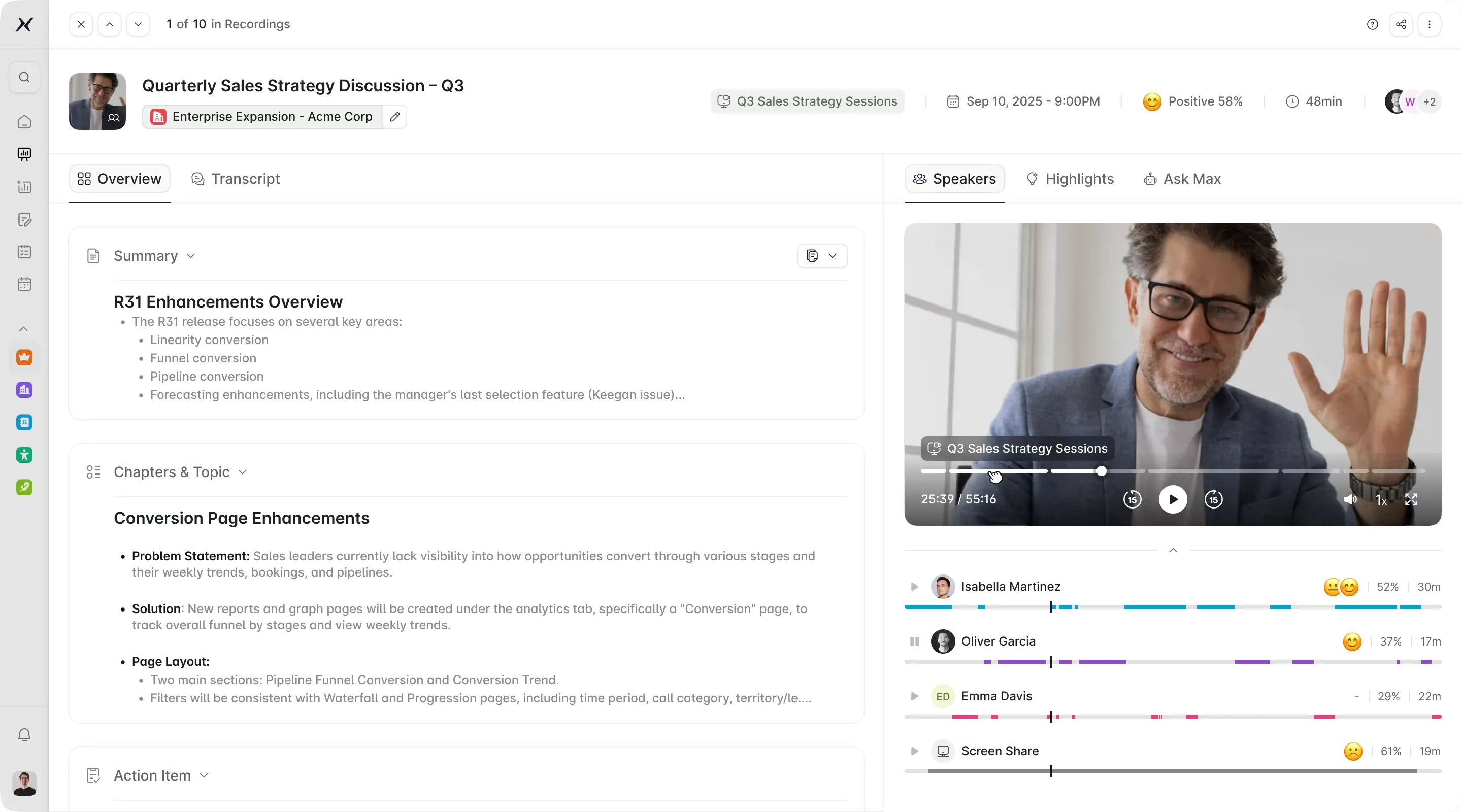
That is where MaxIQ (EchoIQ) Conversation Intelligence comes in. MaxIQ is built to be that layer that turns conversations into instant visibility and clear actions. Like, stuff you can use right away. Not just data you go back and review later when it is already kind of too late.
For teams that want a more integrated approach to CI, it can really help to look at things like EchoIQ. It offers this unique revenue context that can seriously boost how effective conversation intelligence is when it comes to actually driving sales outcomes, not just tracking them.
What makes EchoIQ different: the Context Graph
Most CI tools listen to calls. EchoIQ actually understands them, and that difference comes down to the MaxIQ Context Graph.
The Context Graph is what makes EchoIQ's intelligence genuinely rich rather than just surface-level. Because MaxIQ pulls data from multiple sources across the revenue stack, it does not just know what was said on a call. It knows who said it, what their role and stakeholder position was, what stage the deal was in at that moment, what signals were already present in the account, and how all of that fits together. It is that marriage of conversational intelligence with full deal context that most tools simply do not have.
So instead of a transcript with some keyword flags, you get something much more meaningful: this stakeholder raised this objection at this stage, when these risk factors were already present, and here is what that pattern typically means for deal outcomes. That kind of layered context is what turns a call recording into something you can actually coach from, forecast with, and act on right away.
What EchoIQ helps with (the practical stuff)
With EchoIQ, teams usually focus on things like:
- Instant call capture and real-time transcription
- Actionable AI insights that reps and managers can actually act on right away
- Deal risk alerts (missing stakeholders, no next step, negative shifts)
- Talk-to-listen ratio tracking to help improve discovery quality
- Objection and topic detection so you can see what is slowing deals down
- Coaching workflows tied to outcomes, not just random call reviews for no reason
Basically, EchoIQ backs up the day to day questions that actually drive deal velocity:
- "Is this deal real or drifting?"
- "Did we leave the call with momentum?"
- "What objection is killing our conversion rate this month?"
- "Which reps need coaching on discovery vs negotiation?"
For example, companies like Snowflake have used MaxIQ for revenue forecasting, which kind of proves it works well in that area. And Vast Data has chosen MaxIQ to power its revenue execution, showing it is not just theory but actually running in real sales teams.
{{ci-card}}
Every capability walked through one by one, with screenshots from real calls.
- Pipeline Gap
- Capacity Check
- Deals Required
- Forecast Variance
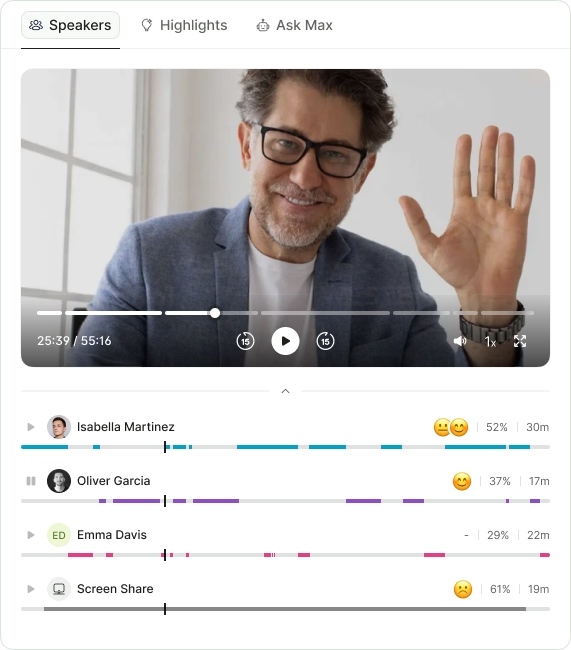
- Pipeline Gap
- Capacity Check
- Deals Required
- Forecast Variance
.avif)