.webp)




.svg)

.webp)
Key Takeaways (TL;DR)
Most RevOps tools are built for the deal: find it, forecast it, close it, then go quiet the moment the customer signs. That's the blind spot, because 40 to 70 percent of SaaS revenue lives in renewals and expansion. So the useful way to compare these tools isn't feature-by-feature. It's one question: where does each one stop?
- MaxIQ: covers pipeline through renewal on one layer; newer and smaller than the incumbents
- Clari, Aviso, BoostUp: stop at forecasting; strong pre-close, quiet after closed-won
- Gong: reads conversations well; forecasting is bolted on, not the core
- Salesforce, HubSpot: the system of record; intelligence is an add-on, not built in
- Salesloft, Outreach: sales engagement only; no forecasting or renewals
- ZoomInfo: the data layer everything else runs on, not a workflow tool
- Vitally: lives entirely post-sale; renewals and churn, no pipeline
I run one of the companies on this list. So take what follows with the right amount of salt.
What I actually believe is this.
The RevOps category has a blind spot, and almost every tool in it shares it.
They're built for the deal. Find it, forecast it, work it, close it. Then the customer signs and the software goes quiet.
That never sat right with me, because the signature isn't where the revenue stops. Renewals and expansion are where 40 to 70 percent of it lives in most SaaS businesses.
So the useful way to compare these tools isn't feature by feature. It's one question: where does each one stop?
That's how this list is ordered.
Eleven tools worth shortlisting, what each does well, and the point where it taps out. Mine included, held to the same line as everyone else.
The best revenue operations tools
- MaxIQ for pipeline-to-renewal coverage
- Clari for forecasting
- Gong for conversation intelligence
- Aviso for AI forecasting
- BoostUp for pipeline and forecasting
- Salesforce for CRM and system of record
- HubSpot for CRM at SMB and mid-market
- Salesloft for sales engagement
- Outreach for enterprise sales engagement
- ZoomInfo for the data foundation
- Vitally for customer success and renewals
Revenue operations tools at a glance
1. MaxIQ
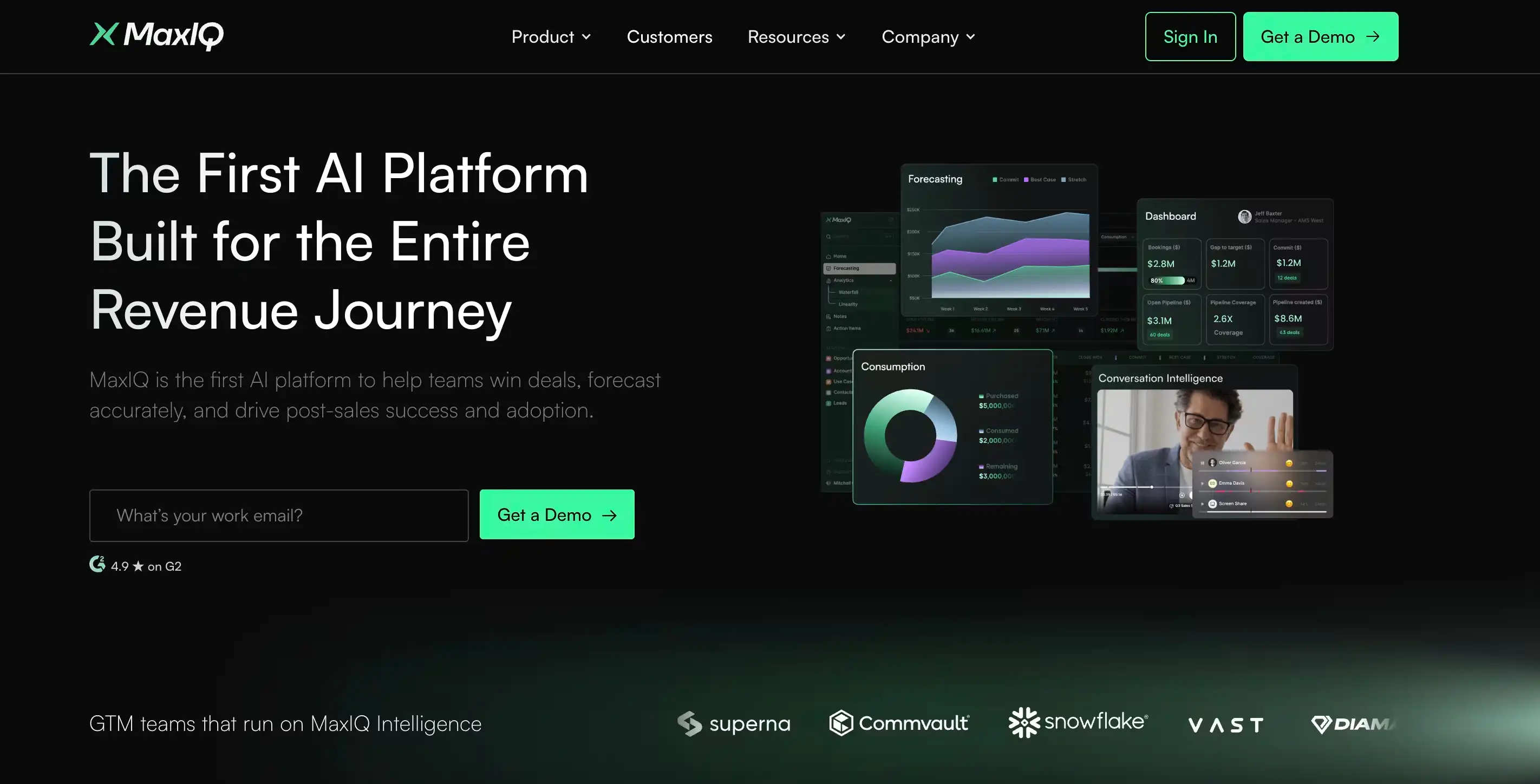
Best for: pipeline-to-renewal coverage
Full disclosure: this is us. MaxIQ is first because "covers the full revenue cycle" is the exact bar this whole piece is arguing matters. So here's the honest version, same shape as every tool below.
MaxIQ is a revenue intelligence platform that runs the whole cycle on one data layer instead of four bolted-together tools. Pipeline, forecasting, deal inspection, and renewals, in one place.
Strengths
- Four modules, one brain: ForecastIQ for forecasting, InspectIQ for deal inspection, SuccessIQ for renewals and customer success, EchoIQ for AI meeting notes. Pipeline through post-sale, no stitching.
- Forecasts run on deal-level AI health scores, not rep-submitted gut calls.
- Snowflake improved forecast accuracy 25 percent on MaxIQ. [source: house stat]
Where it stops
- Newer and smaller than Clari or Gong. Less name recognition in the boardroom.
- Not a data vendor. You bring the contact data, or pair it with ZoomInfo or Clay. MaxIQ does the intelligence on top.
Pricing: Custom.
2. Clari
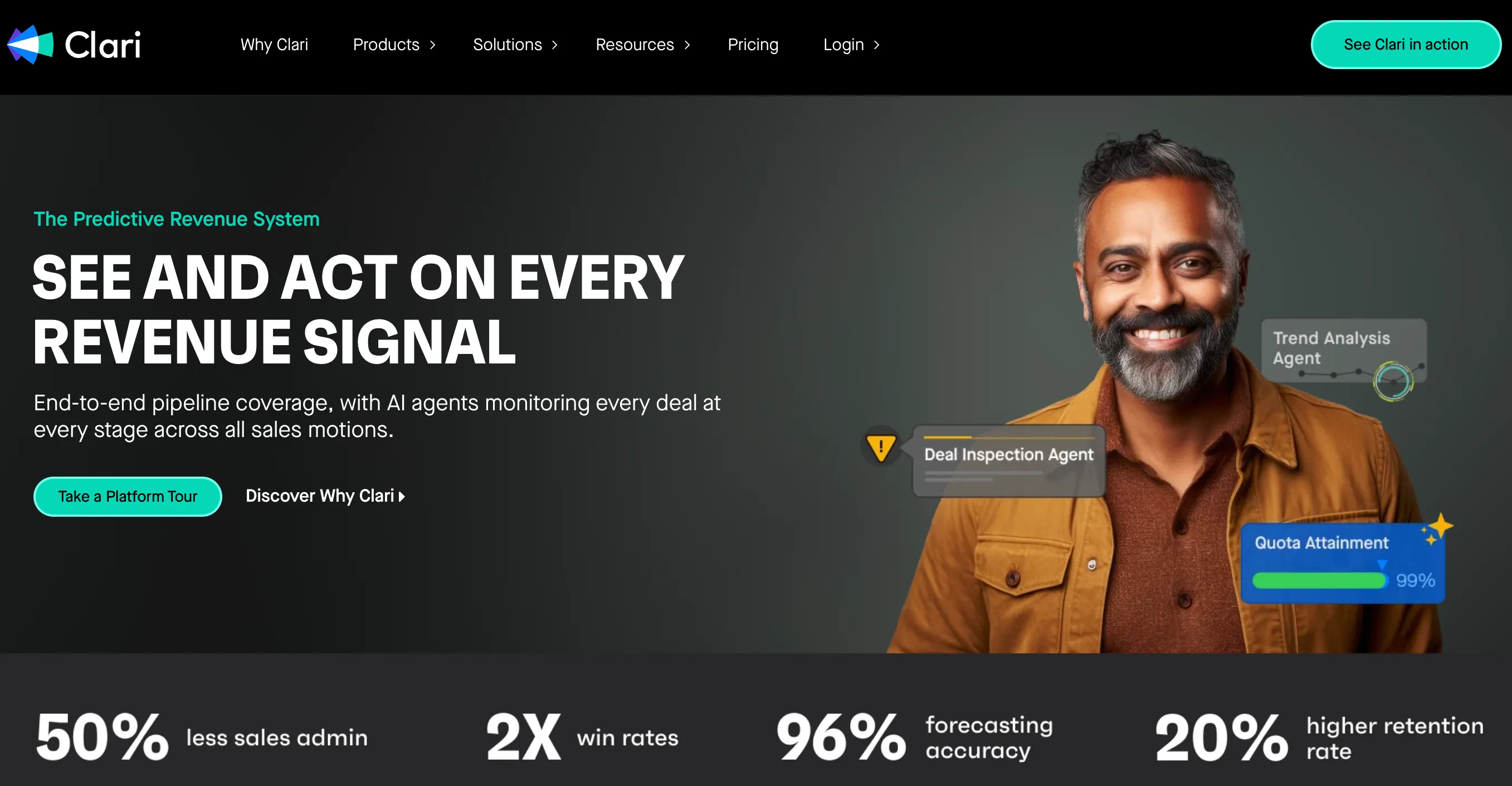
Best for: forecasting
Clari is the category's best-known forecasting and pipeline platform, running across thousands of enterprise revenue teams. If forecasting is the thing keeping your CRO up at night, Clari is the default answer for a reason.
Strengths
- Mature forecasting and pipeline inspection. Engagement-based deal signals, roll-ups, submission workflows.
- Auto-captures activity from email and calendar, so reps update less by hand.
- Deep native Salesforce integration.
Where it stops
- At closed-won. Forecasting and engagement, then quiet on renewals.
- The merger overhang. After the Clari and Salesloft merger, the combined company now carries two conversation-intelligence tools and two engagement tools sitting on a forecasting engine that wasn't built to unify them. Forrester called the deal "more questions than answers."
If you're renewing Clari in 2026, the forecasting isn't the question. It's good. The question is what roadmap you're buying into while the combined product sorts itself out.
Pricing: Custom.
3. Gong
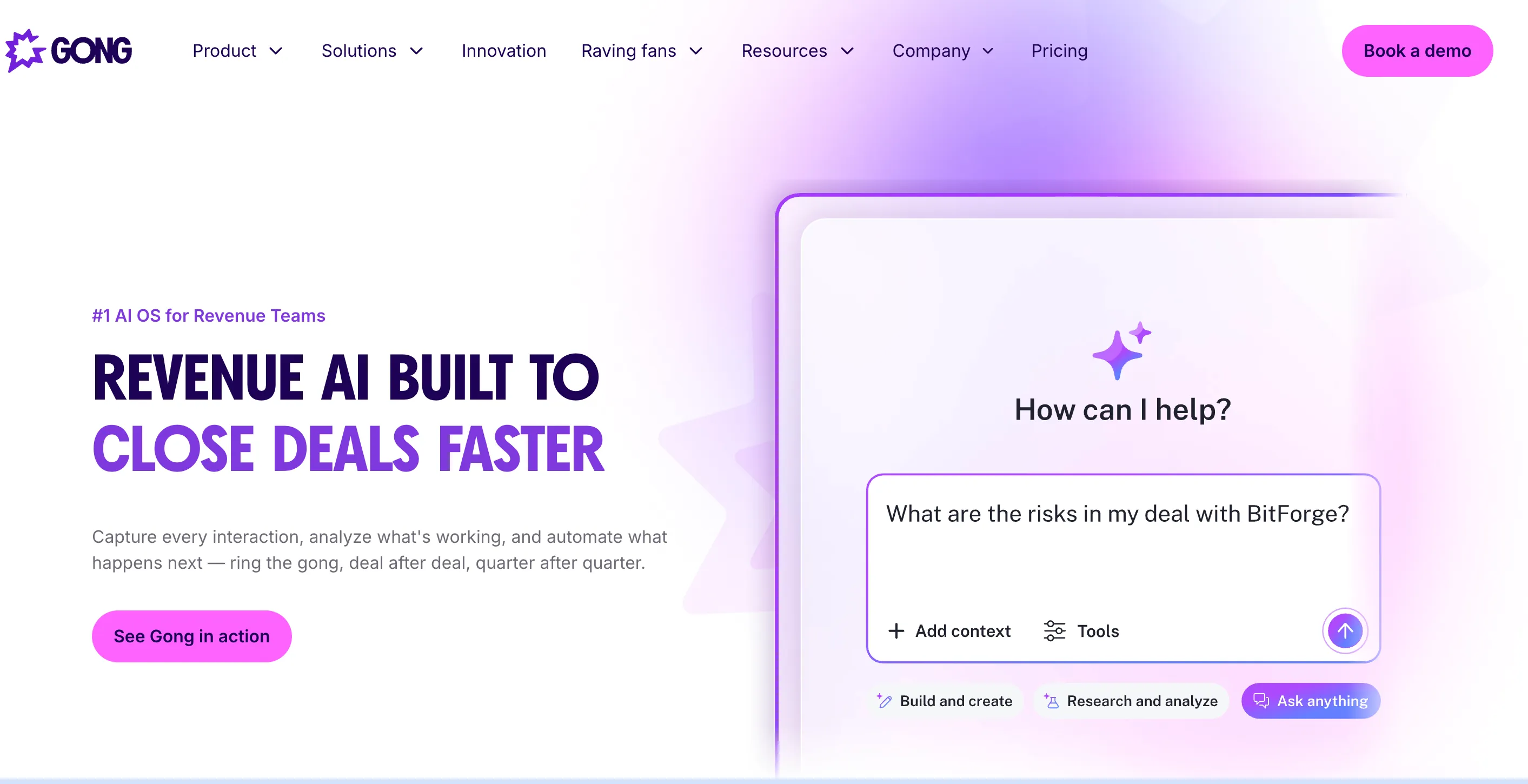
Best for: conversation intelligence
Gong records and analyzes every sales call, email, and meeting, then turns the buyer's actual words into deal and coaching signals. Where a CRM stores fields reps fill in by hand, Gong updates itself from what was really said.
Strengths
- Best-in-class conversation capture and analysis.
- Deal warnings and coaching insights pulled from real interactions, not entered fields.
- Roughly 300 native integrations.
Where it stops
- It reads conversations. It doesn't pull verified contact data, and forecasting is layered on top rather than the core.
- Expensive for SMBs: a platform fee plus per-seat licensing.
Pricing: Custom.
4. Aviso
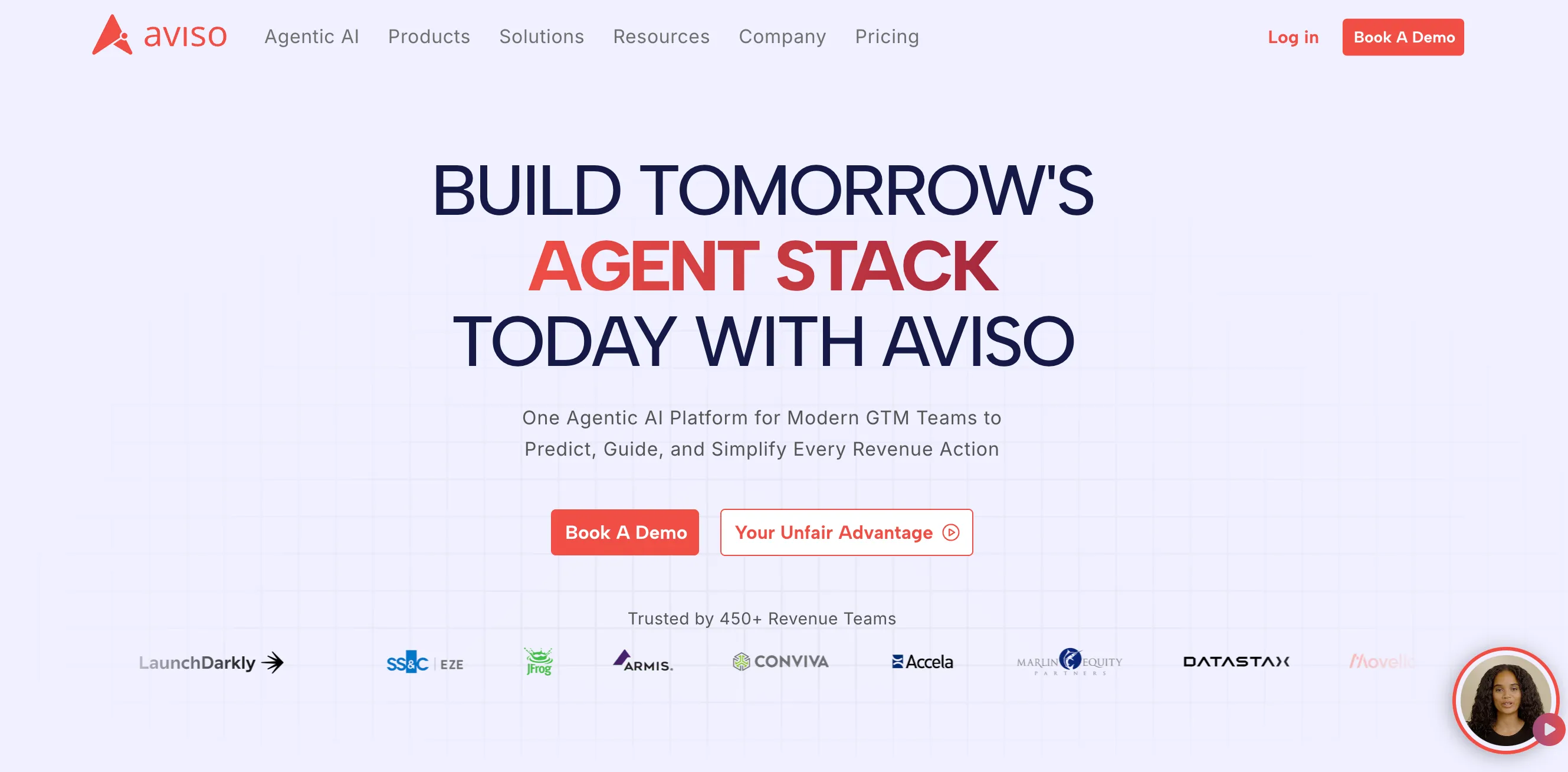
Best for: AI forecasting
Aviso is an AI-first forecasting and revenue-prediction platform built for enterprise revenue teams with complex hierarchies and a lot of deals to call.
Strengths
- Strong predictive forecasting models and scenario analysis.
- Conversational AI assistant for asking pipeline questions in plain language.
- Built to handle messy, multi-segment enterprise forecasting.
Where it stops
- Forecasting-centric. It's the prediction layer, not the full lifecycle. You'll still run engagement, CS, and data elsewhere.
Pricing: Custom.
5. BoostUp
Best for: pipeline and forecasting
BoostUp is a revenue intelligence platform focused on forecast accuracy and pipeline management, with more flexibility than some of the older incumbents.
Strengths
- Flexible forecasting across multiple revenue models, including usage and renewal signals.
- Configurable pipeline views and deal inspection.
- Less rigid to set up than legacy forecasting tools.
Where it stops
- Centered on the pre-close motion. Strong on forecasting, lighter on the post-sale half.
Pricing: Custom.
6. Salesforce
Best for: CRM and system of record
Salesforce is the CRM most enterprise revenue stacks are built around. It's the system of record for pipeline, opportunities, and accounts, and almost everything else on this list plugs into it.
Strengths
- Models nearly any revenue workflow. Revenue Cloud adds CPQ, billing, and contracts. Agentforce adds AI agents on top.
- The biggest integration ecosystem going, through AppExchange.
Where it stops
- It stores records. It's the foundation other tools forecast and act on, not the intelligence layer itself. Revenue Intelligence is a paid add-on.
- Heavy to run. Dedicated admins and ongoing maintenance are the price of that flexibility.
Pricing: From $25/user/mo (Starter) up to $550/user/mo (Agentforce). Revenue Intelligence add-on from $220/user/mo.
7. HubSpot
Best for: CRM at SMB and mid-market
HubSpot is the all-in-one CRM and marketing platform for teams that want one system instead of a stitched-together stack. Full-funnel visibility from first website visit to closed deal, in one place.
Strengths
- One platform for CRM, marketing, and pipeline, with full-funnel visibility.
- Easy to learn, smooth onboarding, and a genuinely useful free CRM tier.
- Breeze enrichment and no-code automation built in.
Where it stops
- Native enrichment is shallower than a dedicated data vendor.
- Forecasting and deal intelligence are lighter than a purpose-built RI tool, so teams at scale bolt one on.
Pricing: Free; paid from $7/seat/mo, Professional from $90, Enterprise from $150.
8. Salesloft
Best for: sales engagement
Salesloft is a sales engagement platform built for outbound execution: multi-step cadences across email, dialer, tasks, and LinkedIn, used by thousands of revenue teams.
Strengths
- Strong cadence engine and a built-in dialer with local presence.
- Engagement tracking at the contact, deal, and account level.
- Now part of the Clari revenue stack post-merger.
Where it stops
- Sequencing, not forecasting or CS. No native data foundation, so it runs alongside a data source.
- Carries the same merger caveat as Clari above.
Pricing: Custom.
9. Outreach
Best for: enterprise sales engagement
Outreach is the enterprise sales engagement platform, built for outbound sequencing at scale with some of the deepest analytics in the category.
Strengths
- The deepest sequencing analytics among engagement tools: which steps, variants, and timing actually drive replies.
- AI agents for autonomous prospecting workflows.
- Solid native CRM integration.
Where it stops
- Top-of-funnel execution. No native B2B data, and no forecasting or renewals.
Pricing: Custom.
10. ZoomInfo
Best for: the data foundation
ZoomInfo is the B2B data layer most stacks quietly run on: 500M-plus contacts, firmographics, technographics, and buying-intent signals feeding everything above it.
Strengths
- The largest verified contact and company dataset, with intent built in.
- Continuous enrichment and CRM hygiene so records don't rot.
- Strong compliance posture (SOC 2, ISO, GDPR and CCPA).
Where it stops
- It's data, not workflow. It feeds your forecasting, engagement, and CS tools. It doesn't replace any of them.
Pricing: Usage-based, free to start.
11. Vitally
Best for: customer success and renewals
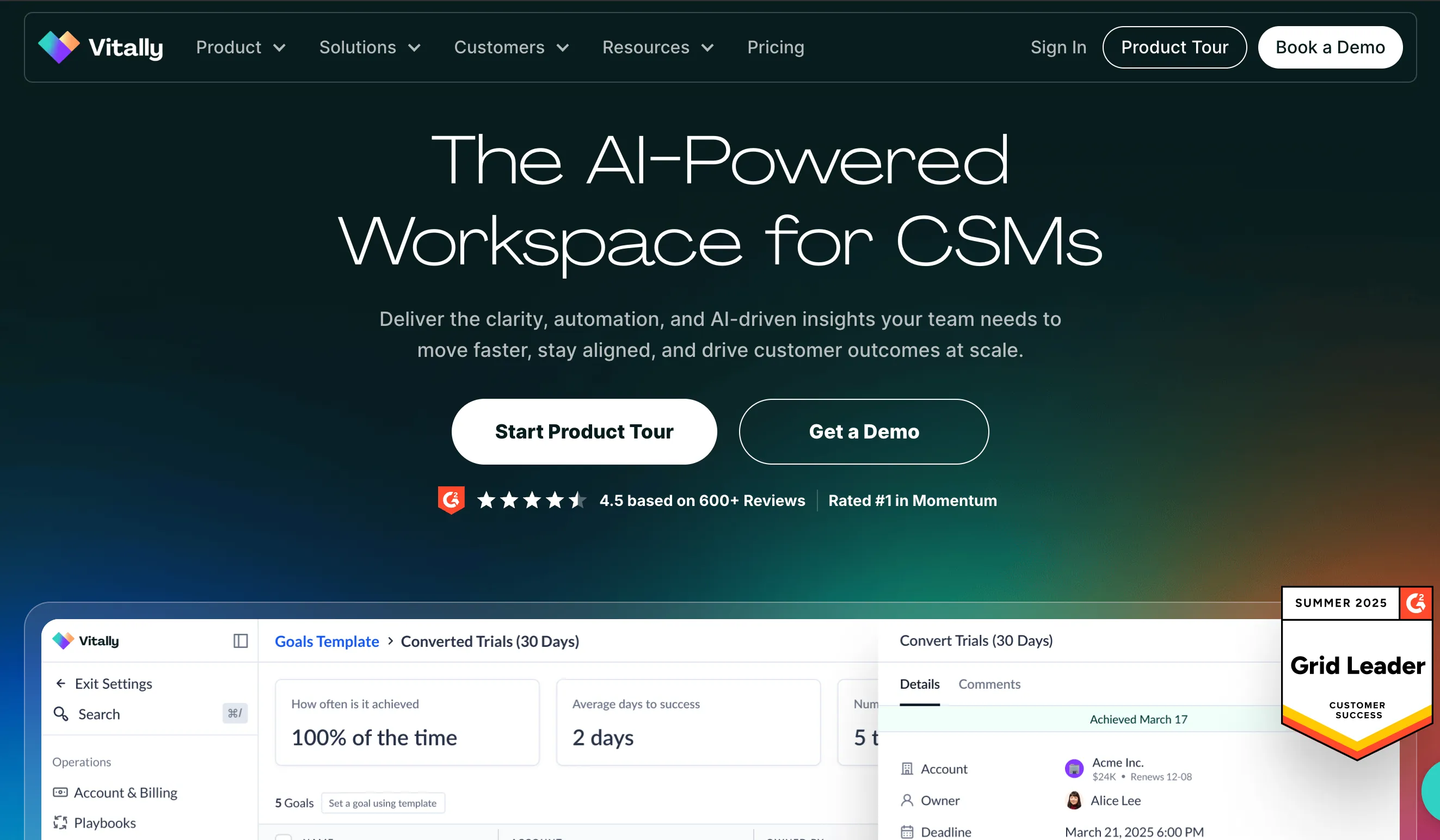
Vitally is a customer success platform built to track product usage, flag churn risk, and protect renewals. It's the only tool here that lives entirely on the far side of closed-won.
Strengths
- Granular product-usage tracking and automated health scoring.
- Triggers CS playbooks and nudges when an account's engagement dips.
- Purpose-built for the post-sale motion, not retrofitted to it.
Where it stops
- Post-sale only. No pipeline, no forecasting, no top-of-funnel. It's the other half of the revenue cycle most RI tools ignore, which is exactly why it earns a spot on this list.
Pricing: Custom.
How to pick, fast
One question sorts most of this list: does your stack break at closed-won?
If forecasting is your only real pain, a forecasting tool (Clari, Aviso, BoostUp) fixes it. If you're drowning in bad data, a data layer (ZoomInfo) fixes it. If reps just need to run outbound, an engagement tool (Salesloft, Outreach) fixes it.
But if you're tired of stitching four tools together and watching the handoff from "closed" to "renewed" fall through the cracks every quarter, that's a different problem. That's the gap a full-lifecycle platform is built to close.
Start with where your revenue actually leaks. Then buy the tool that covers it, not the one with the loudest logo.
Every capability walked through one by one, with screenshots from real calls.
.avif)