.webp)




.svg)

.webp)
Key Takeaways (TL;DR)
A forecast built on conversation data uses what buyers actually say and do to give more context around the number.
- Calls and emails can surface deal risk before CRM fields change.
- Signals like attendance, next steps, procurement, and competitor mentions help show deal health.
- Those signals can be compared with past wins and losses to adjust forecast confidence.
- The same approach can help with renewals and expansion.
- Managers still need judgment. The forecast should explain why a deal looks risky.
Most sales forecasts rely on four simple fields: stage, amount, close date, and the rep's commit. Every one of these is manually typed by the person whose quota depends on it. Yet the buyer has likely shared critical information over weeks of calls and emails that never makes it into that number.
A sales forecast built on conversation data doesn't change the math; it fixes the input. This post walks you through how this works in practice, how conversations turn into probabilities, where this approach extends beyond closed-won, and where you need to be careful.
Where the forecast number comes from today
Stage-based forecasting is simple. You take a stage, apply a historical win rate, multiply it by the deal amount, and sum up the pipeline. Then reps and managers adjust it with a "commit call."
The problem? The model is blind. It sees what a rep entered, but it misses the context: Did the champion show up to the last call? Was a next step actually agreed upon? Did a competitor pop up after pricing? Research shows nearly 20% of pipeline is impacted by stalled deals and slipped dates, and every one of those slips was audible on a call long before the CRM date changed.
What counts as conversation data?
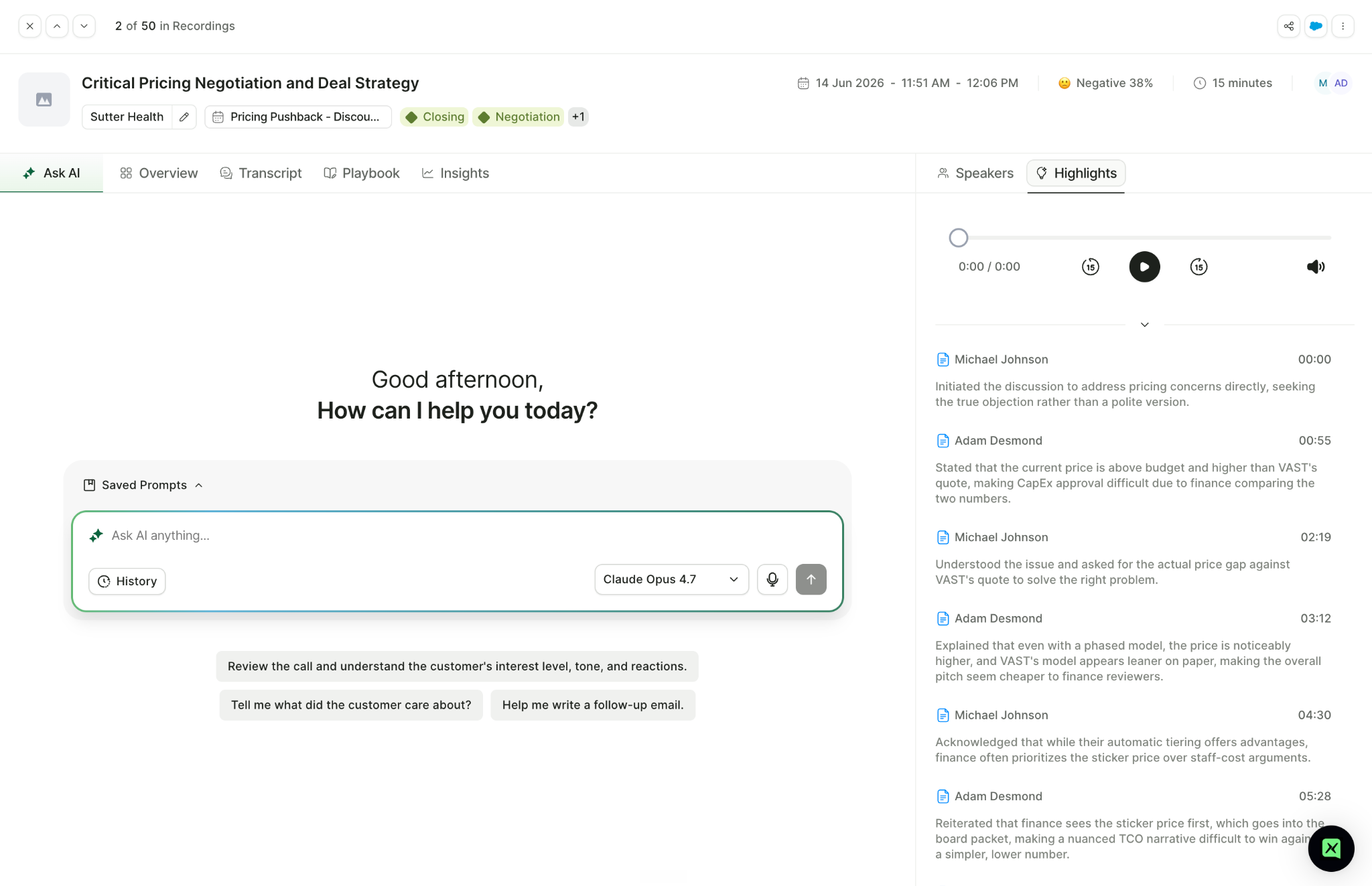
It's not just about transcripts, those are just raw material. True forecast input comes from signals extracted from calls, emails, and meetings, which is exactly what conversation intelligence software is built to surface:
- Attendance: Who joined, and who stopped showing up? (e.g., an economic buyer present on call two but missing from calls three and four).
- Next steps: Was there a clear, dated action with an owner, or did the call just end with "let's reconnect"?
- Competitor mentions: A name dropped in discovery is normal; the same name appearing in week six after pricing is a major signal.
- Pricing and procurement: Did these topics surface, and who raised them?
- Timeline language: Is it specific ("Board approval on the 14th") or vague ("sometime next quarter")?
- Repeated objections: Are the same concerns being raised across multiple calls without resolution?
- Post-sale conversations: Onboarding, QBRs, and support escalations. Most tools ignore these, even though that's where actual revenue begins.
How a signal becomes a forecast input
Step one is extraction. The system analyzes each call and tags signals with timestamps and speakers.
Step two is scoring against your history. The model checks how often those specific patterns led to a win or a loss in your historical data. For example, a missing economic buyer at stage four might be a minor red flag for some companies, but a 30-point drop in win rate for others.
Step three is adjustment. The system either updates the deal's probability or flags it for review with the specific reason attached. It's not just a black-box score; it's correlation over your own outcomes.
One deal, two forecasts
Imagine a deal: stage 5, $180K, closing in three weeks. The standard stage model gives it an 80% chance of closing.
Now, look at the conversation data:
- The project sponsor has missed the last three calls.
- The last meeting ended without a dated next step.
- Procurement hasn't been mentioned, even though close is three weeks away.
- A competitor was named twice on the latest call, right after pricing.
Against your historical data, that pattern wins only 30% of the time. You have two forecasts for the same deal with a 50-point gap. The first told you nothing until the date slipped; the second gave you six weeks of warning and a clear path to fix it.
banner-insert
Forecast past closed-won
In consumption-based models, most revenue arrives 12 to 18 months after the signature, right where pipeline forecasting usually stops.
You can apply the same logic to post-sale accounts. A customer who skips check-ins, repeatedly raises integration issues, and stops discussing expansion is signaling renewal risk.
That's why companies like Snowflake use this approach to forecast across the entire lifecycle: pipeline, onboarding, adoption, renewal, and expansion. As Andrew Straus from Snowflake notes, it helps managers run tighter forecast calls and catch risks early.
Where conversation data can mislead you
This isn't magic. There are real limits:
- Thin history: If you don't have enough closed deals, the model can't calculate reliable trends.
- Long cycles: A 14-month deal might go quiet for weeks and still be healthy.
- Off-record relationships: Deals closed over dinner or text messages won't be captured.
- Internal motion: Sometimes a buyer stops replying because they are busy selling you internally, which looks just like a loss of interest.
- Signal without judgment: A competitor mention is just data. A human still needs to decide if that means "deal risk" or "standard due diligence."
The key is a forecast that shows its work so a manager can make an informed judgment, rather than relying on a black-box score.
Run the forecast review differently
When conversation data powers the model, your weekly meetings change. Instead of asking "What's happening with this deal?", the manager asks, "Why did the sponsor miss three calls?" The rep can finally answer a question based on reality.
Three simple changes: Stop making reps manually update stages and capture them automatically from the call. Rank deal reviews by flagged signals, not just deal size. And add a "reason" column to your forecast for every move.
Want to see this in action? Get a demo and bring a real deal you're currently unsure about.
Every capability walked through one by one, with screenshots from real calls.
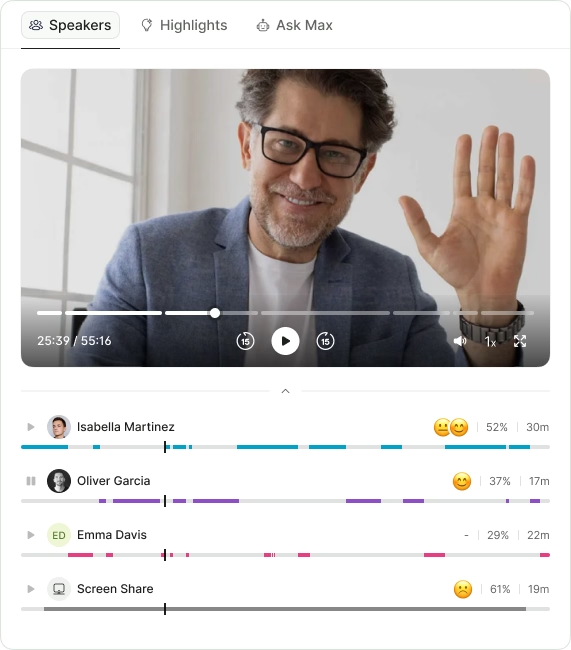
- Call summaries
- Sentiment analysis
- Next steps
- Search any call in seconds
.avif)