.webp)




.svg)

Key Takeaways (TL;DR)
Deal management software helps you see what is moving, what is stuck, and which deals need attention. Three picks for different needs:
- MaxIQ if you need deal inspection and forecasting connected to what happens after the signature.
- Gong if the information you need is buried in customer calls.
- Pipedrive if you need a simple pipeline your team can keep up to date.
Deal management software sits on top of your CRM and tracks what is actually happening inside your open opportunities. Who is engaged, what has moved since last week, which deals are in trouble. It is a close cousin of deal intelligence software, which focuses on scoring individual opportunities.
This list covers tools built for B2B sales pipelines. If you are running M&A or private equity deal flow, that is a separate category with separate vendors, and there is a section on it at the end.
Below are the 7 platforms I think are the best in the market right now.
The order is not a ranking. Every entry carries a line on who it fits, because the right answer depends on whether your problem is visibility, forecast accuracy, or what happens to a deal once it closes.
One disclosure before we start. MaxIQ is mine. It is on the list because I would put it there anyway, and you should read it knowing that.
How I picked these
Four questions, applied to every tool below.
Where does the deal data come from? Captured from what actually happened, or typed in by someone who wants the deal to look good.
Does it inspect, or only display? A board showing your pipeline is not the same as a system telling you which deal is in trouble and why.
How much rep discipline does it assume? Any tool that only works when the CRM is perfectly maintained is relying on a plan that has never once survived a quarter end.
What happens after closed-won? Most of a contract's value arrives after the signature, and most of this category stops paying attention there.
CPQ and quoting tools are sometimes filed under this heading. They solve a different problem and they are not on this list.
1. MaxIQ
Best for: teams whose forecast calls run on rep testimony, and whose renewals depend on what got promised during the sale.
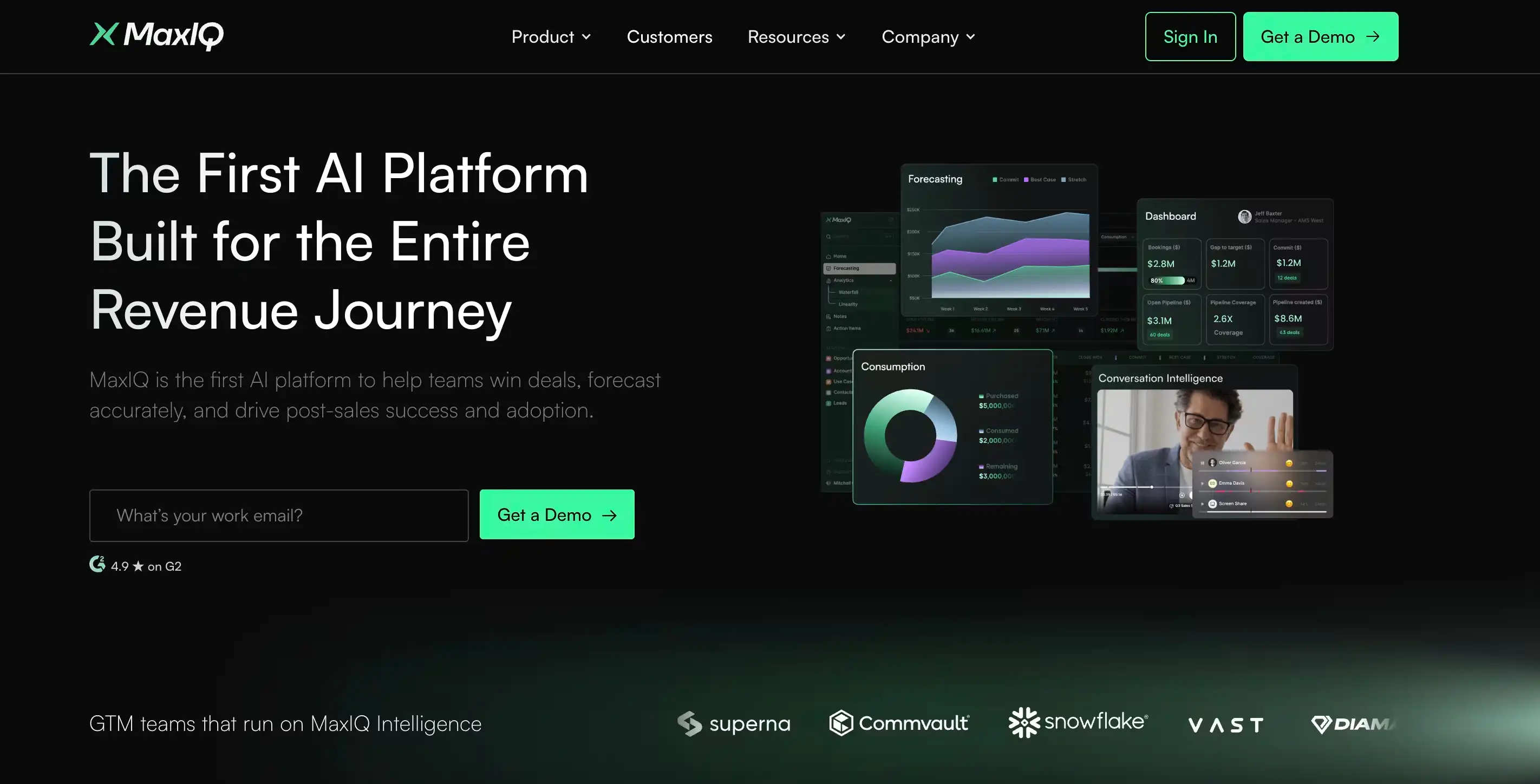
MaxIQ puts conversation intelligence, deal inspection, forecasting and renewal management on one data model.
That last part is the reason it exists. The same record follows an account from the first discovery call through onboarding to renewal, so the integration date your AE promised in month four is visible to the person running the account in month fourteen.
Deal inspection scores opportunities against buyer signals rather than rep confidence: who is engaged, how the close date has moved, whether the economic buyer has ever joined a call.
Ask Maximus answers pipeline questions in plain language, and Recipes lets you save the ones you ask every week so they run again on current data instead of being retyped.
Where it falls short: it is younger than Salesforce or Gong. If what you want is a visual pipeline for six reps, this is more platform than the problem needs.
Pricing: contact for pricing.
2. Salesforce Sales Cloud
Best for: enterprises that want the system of record and the deal layer to be the same thing, and have the admin capacity to build it.
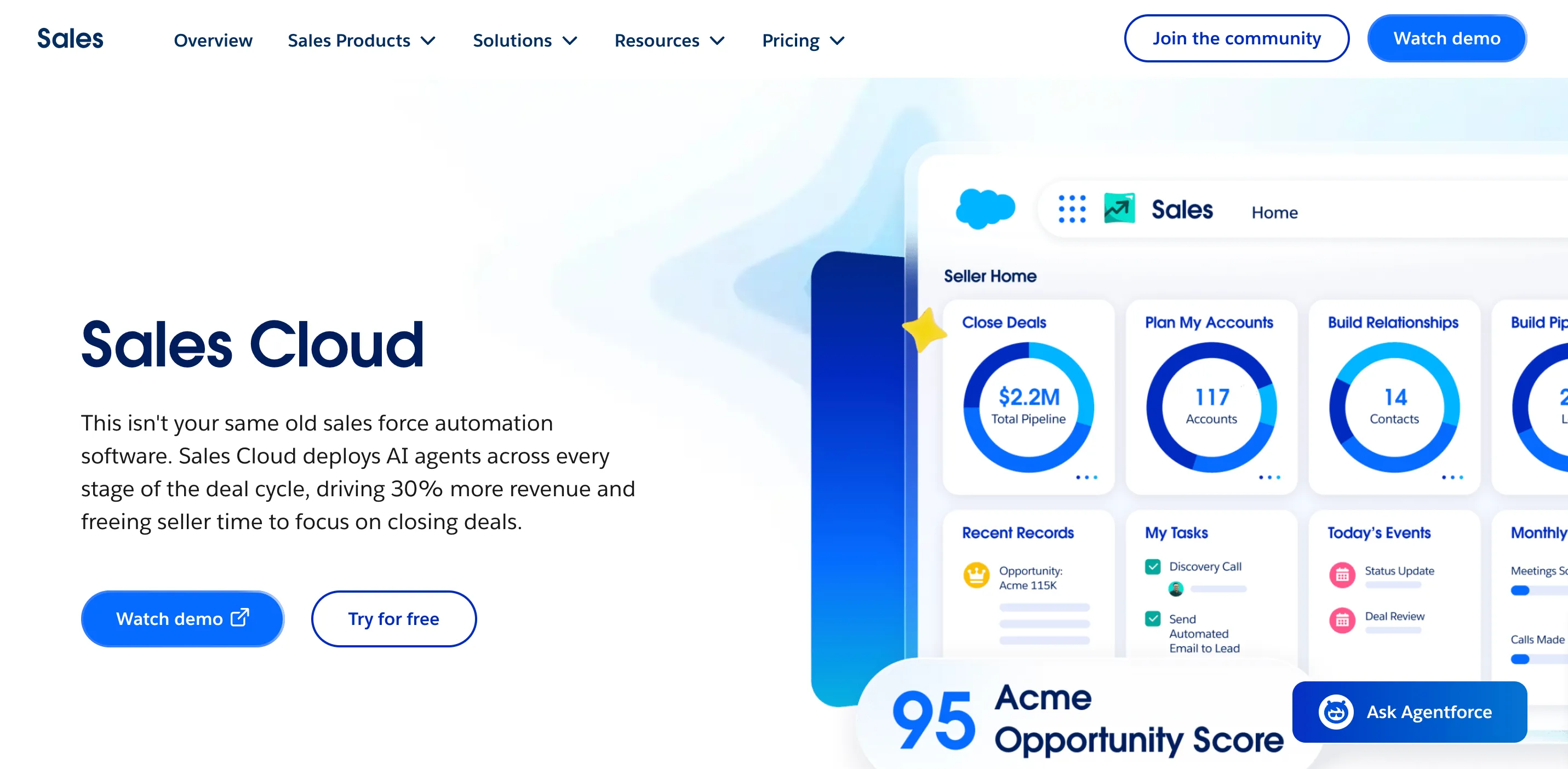
Sales Cloud is where B2B opportunities live by default, and the pipeline and forecasting tooling has improved steadily.
Einstein adds opportunity scoring and deal insights, and the higher editions bring conversation intelligence into the same platform.
For teams already deep in Salesforce, there is a real argument for not adding another vendor beside it.
Where it falls short: everything runs on what reps enter. The forecast is exactly as honest as the opportunity records behind it, and the features that would close that gap live in the upper editions or arrive as paid add-ons.
Configuration is a project with a budget and an owner, not an afternoon.
Pricing: published per-user editions running from roughly $25 to $550 per user per month. Most mid-market teams land on Enterprise. Check the current figures before you quote them, because Salesforce moves them.
3. HubSpot Sales Hub
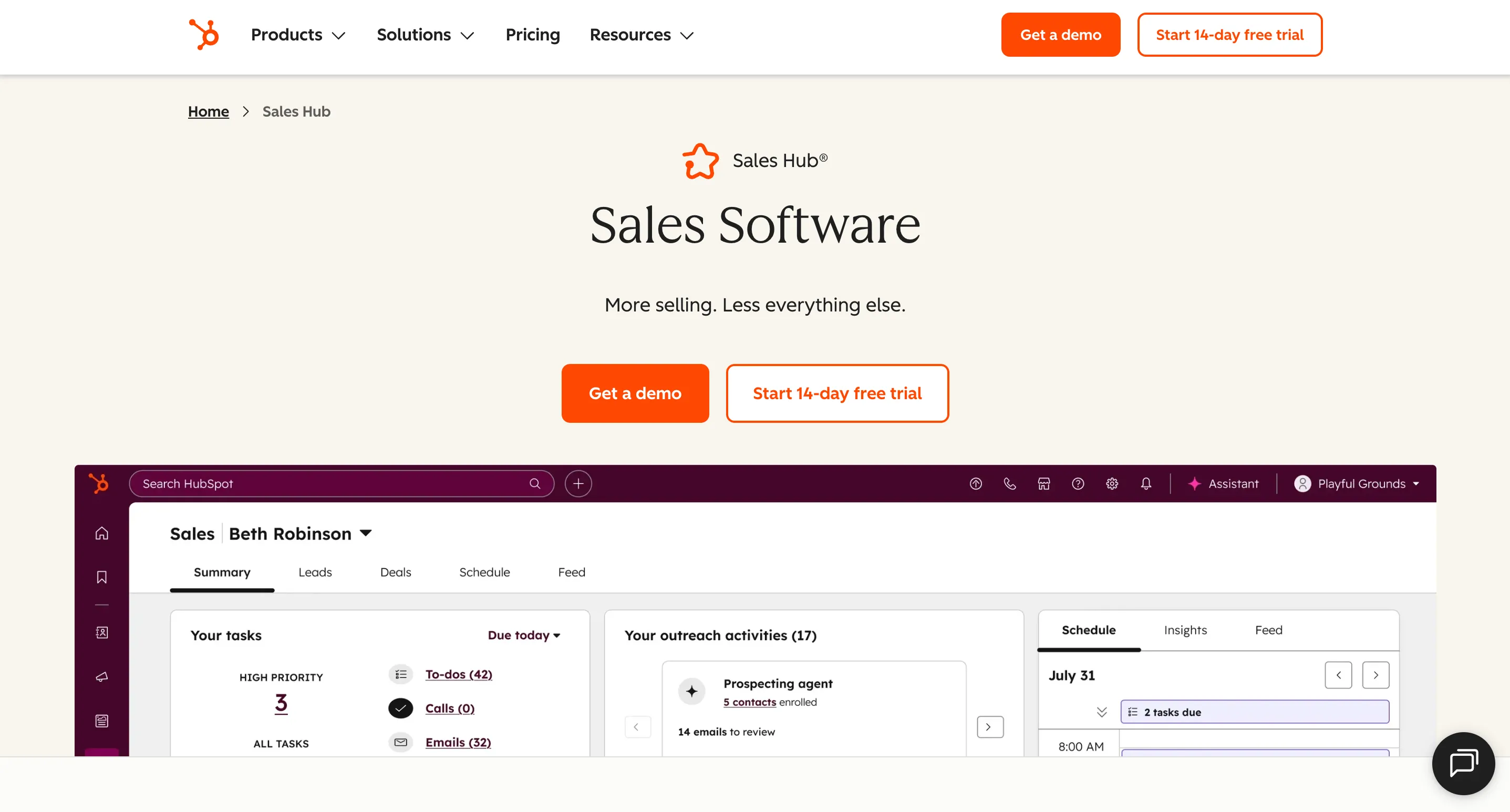
Best for: teams that want pipeline management and marketing sitting on the same contact record, without a Salesforce-sized implementation.
Sales Hub covers deal pipelines, sequences, forecasting and reporting, and a competent RevOps person can run it without a dedicated admin.
The deal tracking is clean and the reporting is usable out of the box.
The shared contact database is the honest reason most teams pick it. Marketing and sales arguing over one record beats the two of them arguing over two.
Where it falls short: the deal features worth having sit in Professional, which is a large jump from Starter and carries a one-time onboarding fee.
And like Salesforce, it reports what your reps record. Same limitation, friendlier interface.
Pricing: a free tier with hard caps, Starter around $15 to $20 per seat per month, Professional in the $90 to $100 per seat range plus onboarding.
4. Revenue Grid
Best for: Salesforce teams that want captured activity and deal signals without running a second platform alongside the CRM.
Revenue Grid is Salesforce-native and builds its picture from activity it captures rather than from fields reps fill in. Emails, meetings, engagement across the buying group.
That activity feeds deal health scoring and forecasting, which is the right order to do it in.
Because it lives inside Salesforce, the ops overhead is lower than standing up a separate system and syncing it back.
Where it falls short: it is built around Salesforce. Run HubSpot or anything else and this is not your tool.
Pricing: no public pricing.
5. Gong
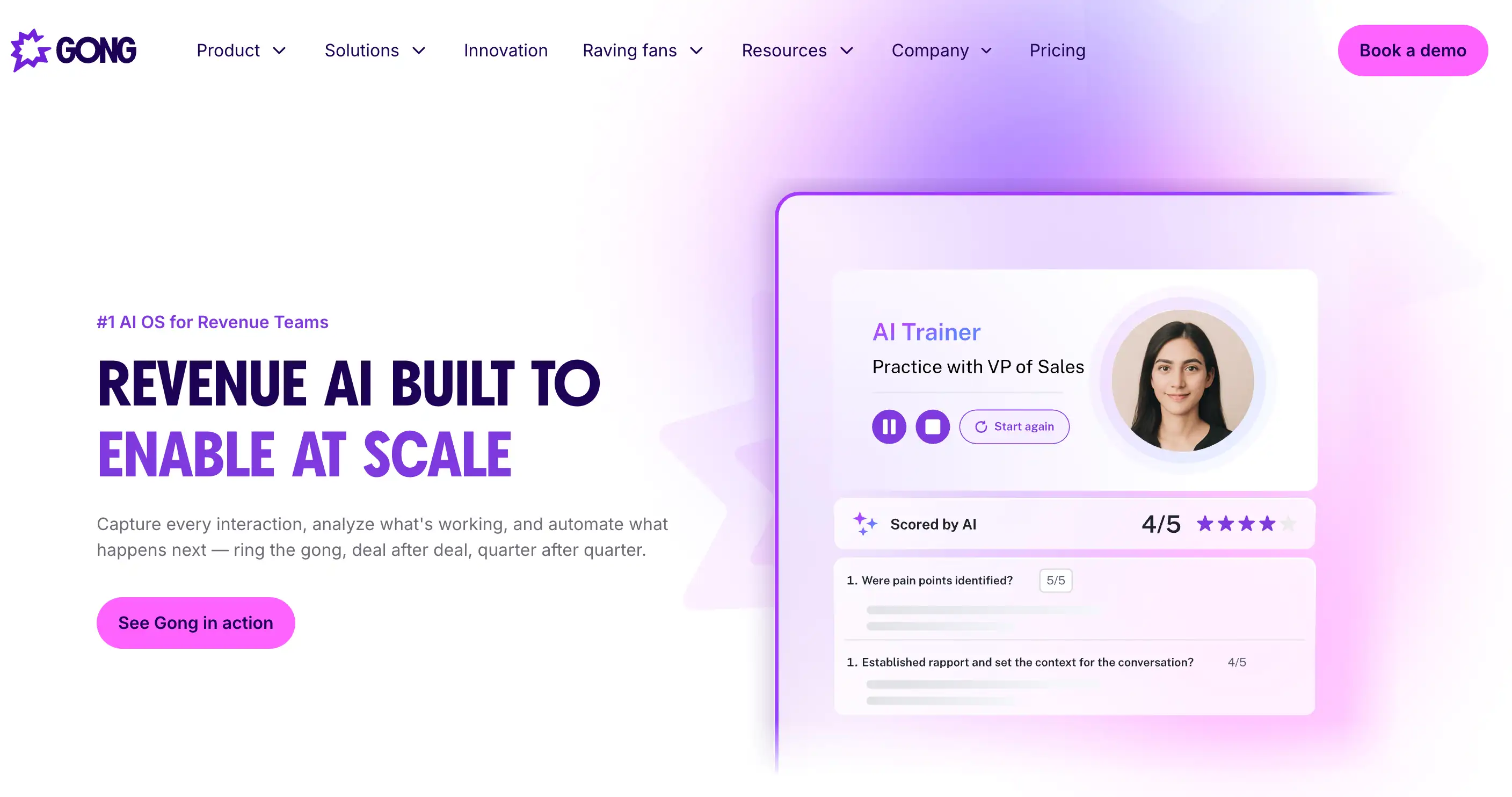
Best for: teams whose deals turn on what was actually said on the call.
Gong records, transcribes and analyzes customer conversations, then rolls what it hears into deal boards, pipeline views and forecast rollups.
The conversation data is the strongest in the category and nobody serious argues otherwise.
The coaching use case alone justifies it for a lot of teams. Managers stop guessing at what their reps sound like in front of buyers.
Where it falls short: the deal intelligence is built outward from conversations, so coverage of the commercial mechanics is thinner than in tools that start from the pipeline.
It also stops at the sale. If most of your revenue arrives at renewal, the system that understands your customer best goes quiet at exactly the wrong moment.
Pricing: no public pricing. Expect a platform fee plus per-seat licensing.
6. Outreach
Best for: teams whose bottleneck is execution volume rather than visibility.
Outreach began in sales engagement and has built deal management, forecasting and conversation intelligence on top of it.
If your reps already live inside sequences all day, keeping execution and deal tracking in one place removes real friction and a login.
Where it falls short: the deal and forecasting layers are newer than the engagement core, and they show it.
If you are not using the engagement side, you are paying for the half of the platform you do not need.
Pricing: no public pricing.
7. Pipedrive
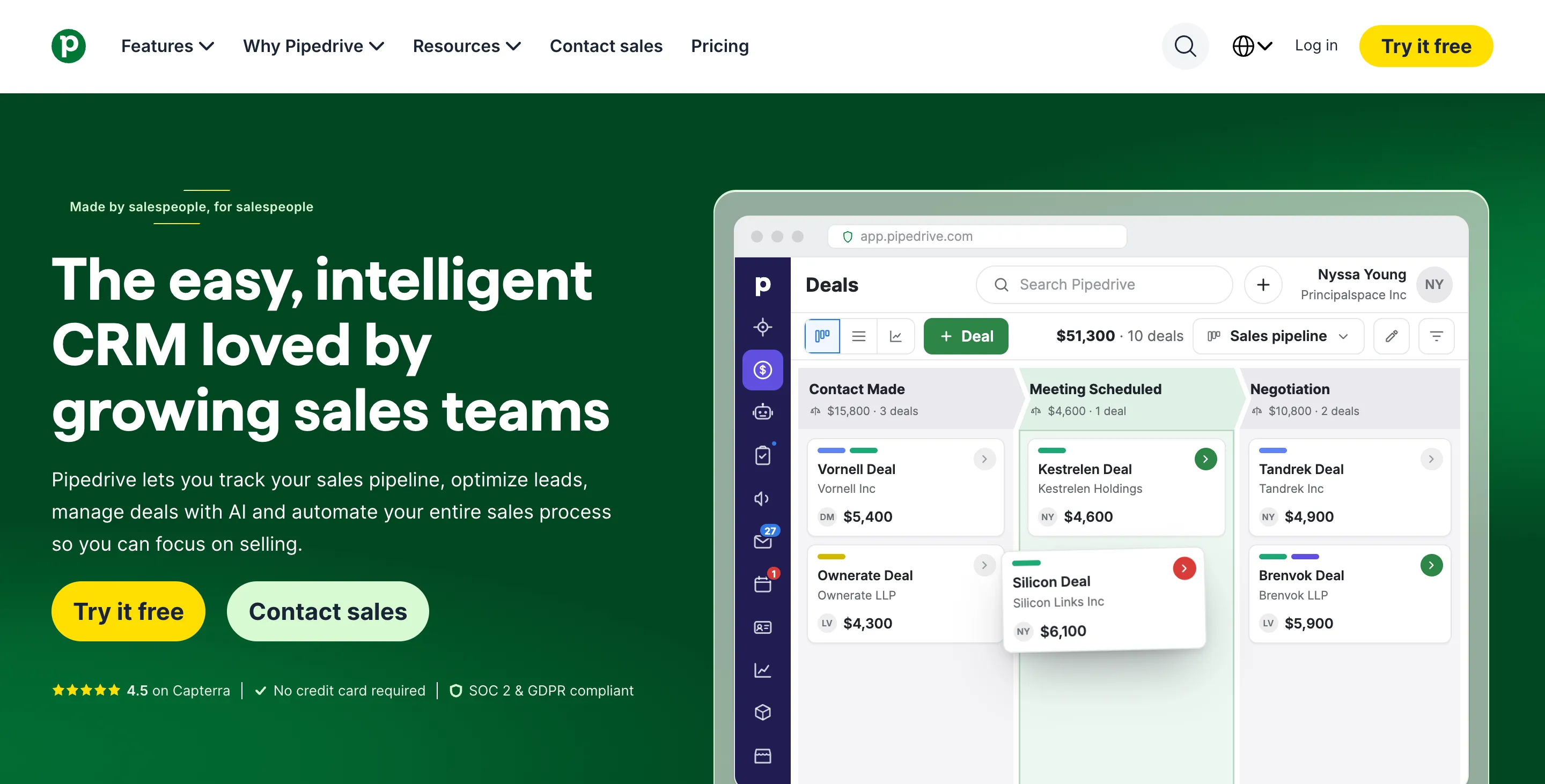
Best for: lean sales teams that want a working visual pipeline this week.
Pipedrive is a pipeline-first CRM. Drag deals across stages, see what is stuck, get on with the day.
It flags deals that have sat too long in a stage, which is the simplest useful form of deal inspection and more than some far more expensive tools actually deliver.
Setup takes days, not quarters. For a team under twenty reps with no ops function, that matters more than any feature comparison.
Where it falls short: it is a CRM, not an intelligence layer. It knows what your reps put in it and nothing else.
Add-ons are billed separately, so the seat price on the pricing page is rarely the number on the invoice.
Pricing: published per-seat tiers running from roughly $14 to $99 per seat per month on annual billing, plus add-ons.
Which one fits your team
Four situations, because most buyers are in one of them.
You already run Salesforce and your forecast is built on rep opinion. Start with Revenue Grid, since captured activity inside the CRM is the shortest path to a defensible number. Look at the standalone platforms only if you need deeper inspection than that gives you.
Your deals are long and complex, and the decisive information lives in conversations nobody else hears. Gong, and it is not close.
You have fewer than twenty reps and no ops team. Pipedrive or HubSpot. Skip the intelligence layer entirely until the pipeline itself is under control, because a scoring engine fed by an unmaintained CRM produces confident nonsense.
Your losses are happening after the signature rather than before it. That is a different problem from pipeline visibility and most of this category will not touch it. You want something that carries the sales record into onboarding and renewal, which is the gap MaxIQ was built for.
If you meant M&A deal flow
Two different categories share this name, and search engines cannot tell them apart.
If you are tracking acquisition targets, running diligence and managing a data room, nothing above applies to you. Those platforms are DealRoom, Midaxo, Affinity and DealCloud, and they organize around transactions rather than sales opportunities.
The test takes a second. If your deals involve buying or selling companies, you want that category. If your deals have a champion, a close date and a quota attached, you want the list above.
Every capability walked through one by one, with screenshots from real calls.
.avif)