Key Takeaways (TL;DR)
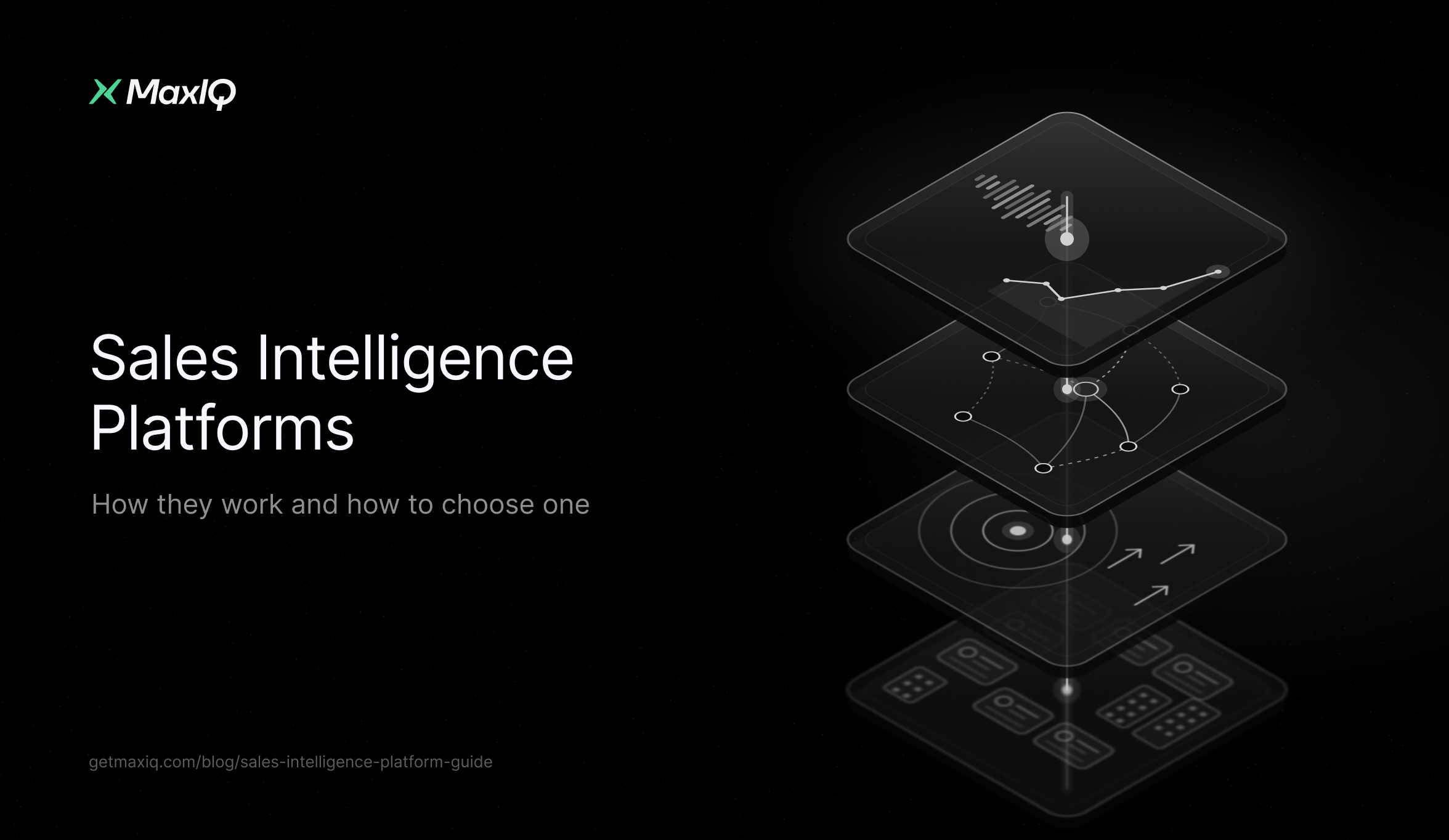
A sales intelligence platform gives sales teams current data on who to sell to and when. The tools fall into four layers that follow a deal from first contact to close:
- Find accounts: Apollo.io, ZoomInfo
- Spot buying intent: 6sense
- Enrich data: Clay
- Win open deals: MaxIQ, Gong
Start with one data tool, then add layers as your pipeline grows.
A sales intelligence platform is software that gives sales teams up-to-date data on the companies and people they sell to, along with signals that show when an account is worth contacting. Reps use it to decide who to go after and when, without researching every account by hand.
Your CRM already holds the accounts and deals your team is working on. A tool like this brings in data on the accounts you haven't touched yet, plus what's changing at the ones you have, like a new VP of Sales or a fresh funding round.
Most teams first buy it for contact data. The category has grown since then to cover buying signals and enrichment too, and some tools now go as far as what happens inside open deals. So two products that both call themselves sales intelligence can do very different jobs.
Below is what these platforms do, how they work, the 14 worth knowing (grouped by the job they do), and how to pick one. If you're mainly here for the tools, they start in the third section.
What a sales intelligence platform does
A sales intelligence platform does the account research a rep would otherwise do by hand. It finds the right companies and people to sell to, and tells you when something changes at an account you care about.
Most platforms are built from four parts:
- A company and contact database. Firmographics, job titles, verified emails and direct dials for the people you want to reach.
- Buying signals. Hiring, funding, tech changes and research activity that suggest an account may be in the market.
- Enrichment. Filling in and refreshing the records already in your CRM, so a contact who changed jobs doesn't stay on your list.
- Delivery into your workflow. CRM fields and alerts that put the data where reps already work.
In practice, that might be an SDR pulling a list of 200 mid-market fintech companies that just hired a head of RevOps. Or an AE reading a two-paragraph account brief before a first call, instead of spending 40 minutes across LinkedIn tabs.
The data matters because it's what makes outreach relevant, and buyers notice when it isn't. In a Gartner survey of 632 B2B buyers, 73% said they actively avoid suppliers who send irrelevant outreach.
Platforms differ mostly in which of those parts they're strongest at. That's why the list later in this guide groups them into four layers: contact and company data, intent and account signals, enrichment and workflow, and deal and conversation intelligence.
That last layer picks up where most sales intelligence stops, once the meeting is booked.
How sales intelligence works
Under the hood, most platforms run the same four steps:
- Collect. Pull data from public sources like company websites, job boards, press releases and filings, and add it to the vendor's own database.
- Enrich and verify. Match each record to the right company, fill in missing fields, and check emails and phone numbers before a rep uses them.
- Score. Rank accounts and contacts against your ideal customer profile and their recent signals, so the best-fit ones rise to the top.
- Deliver. Push the results into your CRM, a sequencing tool, Slack or a browser extension.
The data itself comes from a few places. Public web data is the base layer. Some vendors add partner networks on top. Bombora, for example, measures research activity across a co-op of thousands of B2B media sites and tracks more than 25,300 intent topics.
Then there's your own data, which is often the most useful of all. Your CRM history and recorded calls show how an account has actually behaved with your team, which no outside database can see.
AI is changing the enrichment and score steps fastest. Instead of a rep skimming ten news results before a call, a research agent sums up the account in a paragraph. Gartner predicts that 95% of sellers' research workflows will begin with AI by 2027, up from less than 20% in 2024.
That shifts what's worth paying for. Once every tool can summarize a company page, the difference between platforms comes down to the data underneath: how fresh and complete it is for your market, and whether it reaches the rep while it still matters.
Sales intelligence platforms by layer
Here are 14 platforms worth knowing, grouped by the job they do instead of ranked. Most teams end up with one tool from the first layer and add others as they grow. Prices are only listed where the vendor publishes them, checked in October 2026.
The first layer is contact and company data. This is what most people picture when they hear sales intelligence: a database of companies and the people who work there, with emails and phone numbers you can export.
ZoomInfo
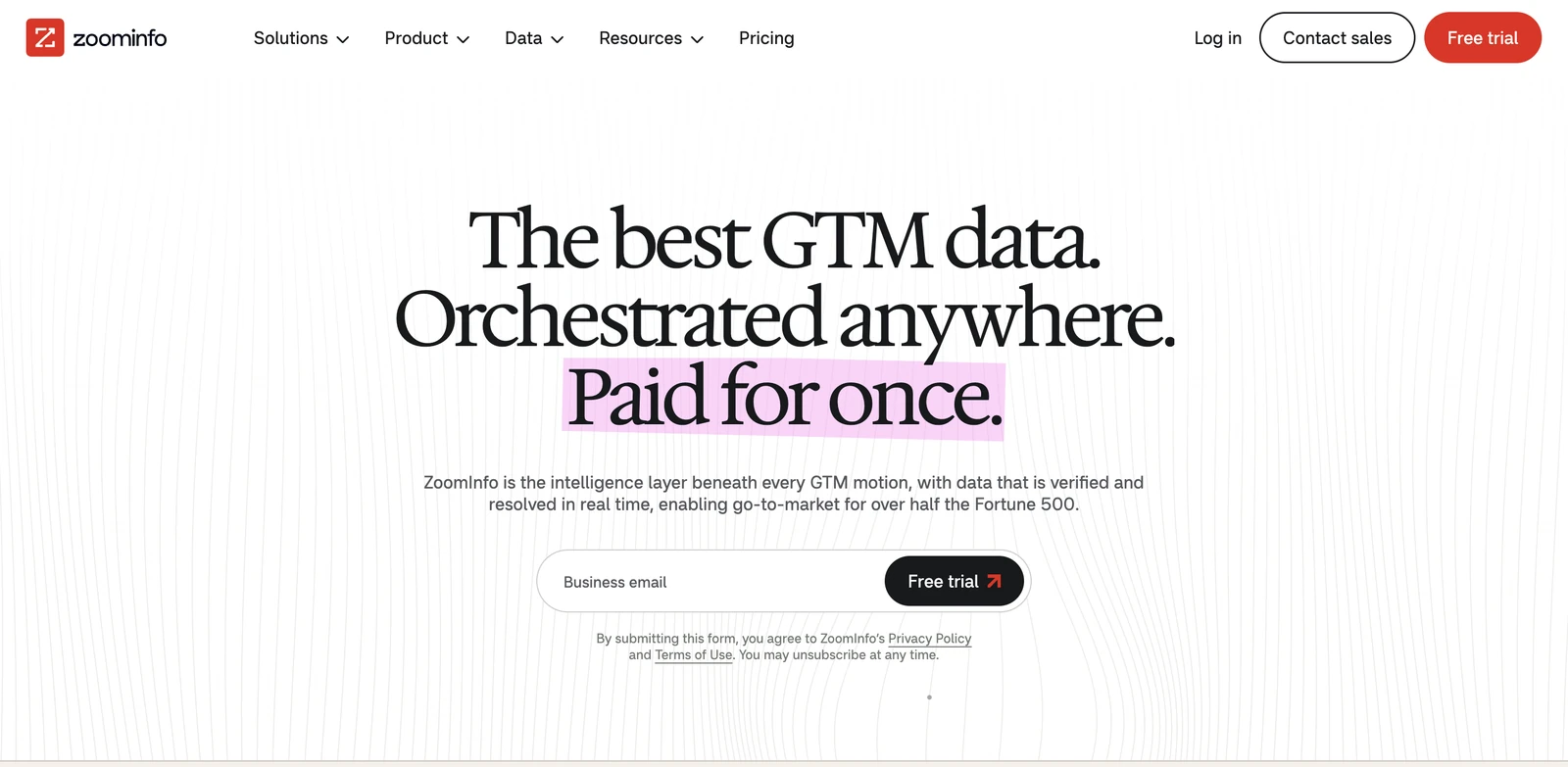
Best for larger outbound teams that want contact data, intent and workflows from one vendor.
ZoomInfo sells its sales product in three tiers. Professional covers contact and company profiles plus a Chrome extension, while the Copilot tiers add intent signals and AI account summaries.
The trade-off is cost visibility. Pricing isn't published, and each contact or company export uses a credit, so what you pay depends on how much your team pulls.
Apollo.io
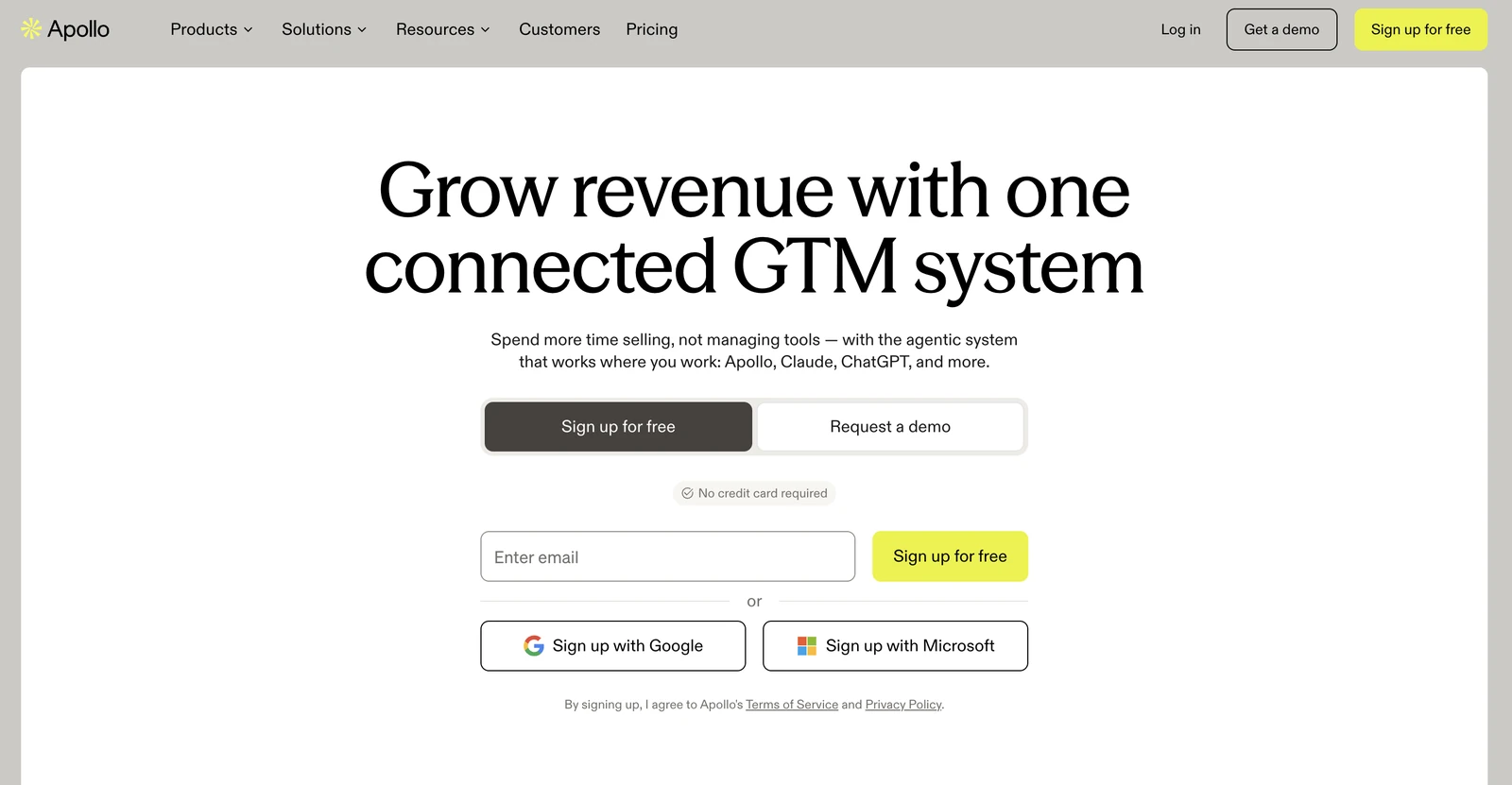
Best for small and mid-sized teams that want data and outreach in one tool.
Apollo puts a contact database alongside email sequencing and a dialer. Its pricing page lists 240M contacts and 30M companies, and the free plan stays free with no time limit.
Credits are pooled across the team and don't roll over, so heavy prospecting months can run you into the limit. The free plan also connects only Gmail accounts.
Cognism
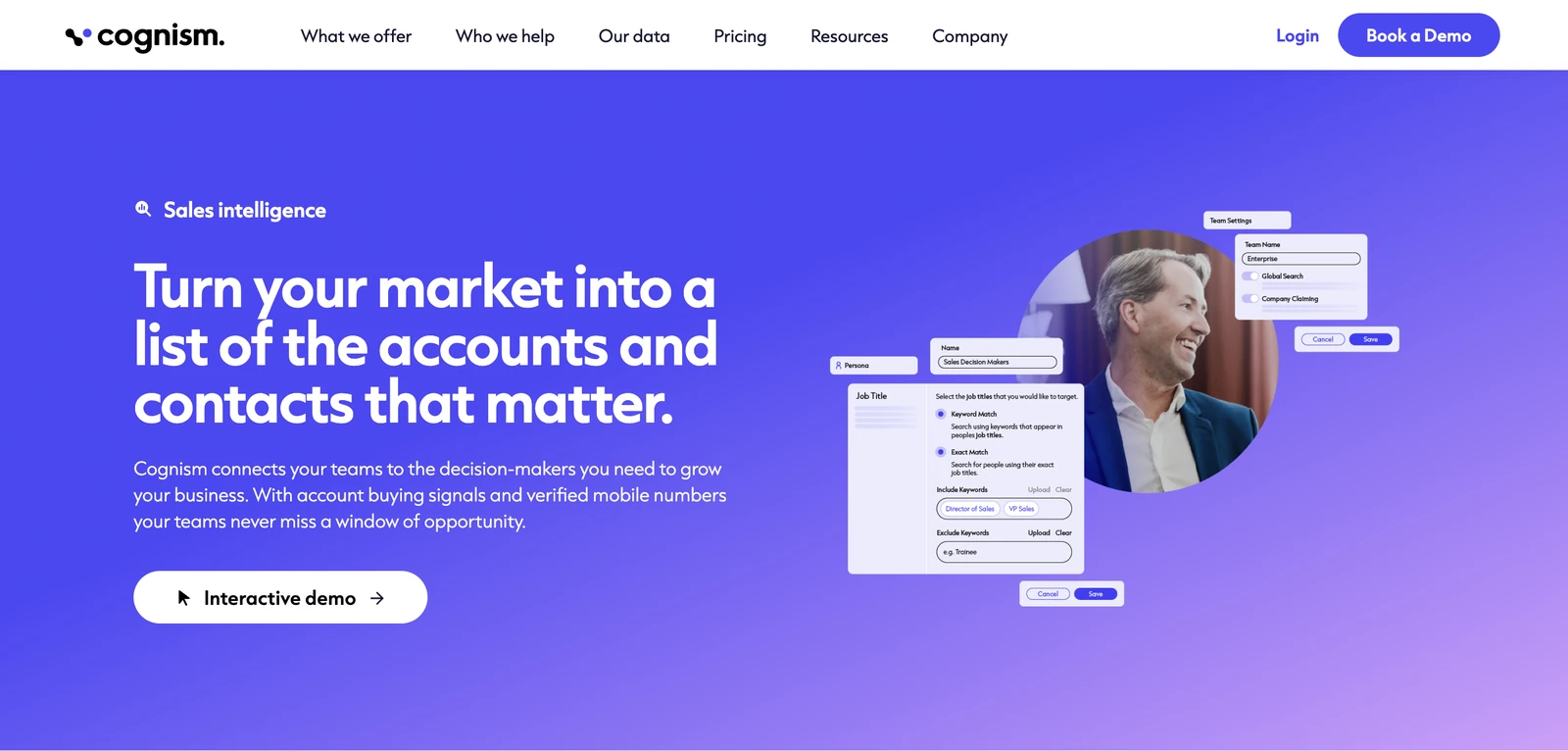
Best for teams selling into Europe.
Cognism's Pro package adds phone-verified mobile numbers and buying-intent prioritization on top of contact and company data, with CRM enrichment sold as an add-on. Its data and compliance pitch is built around European markets.
Pricing is quote only, and both prospecting packages start at five seats, which makes it a bigger first step for a team of two.
Lusha
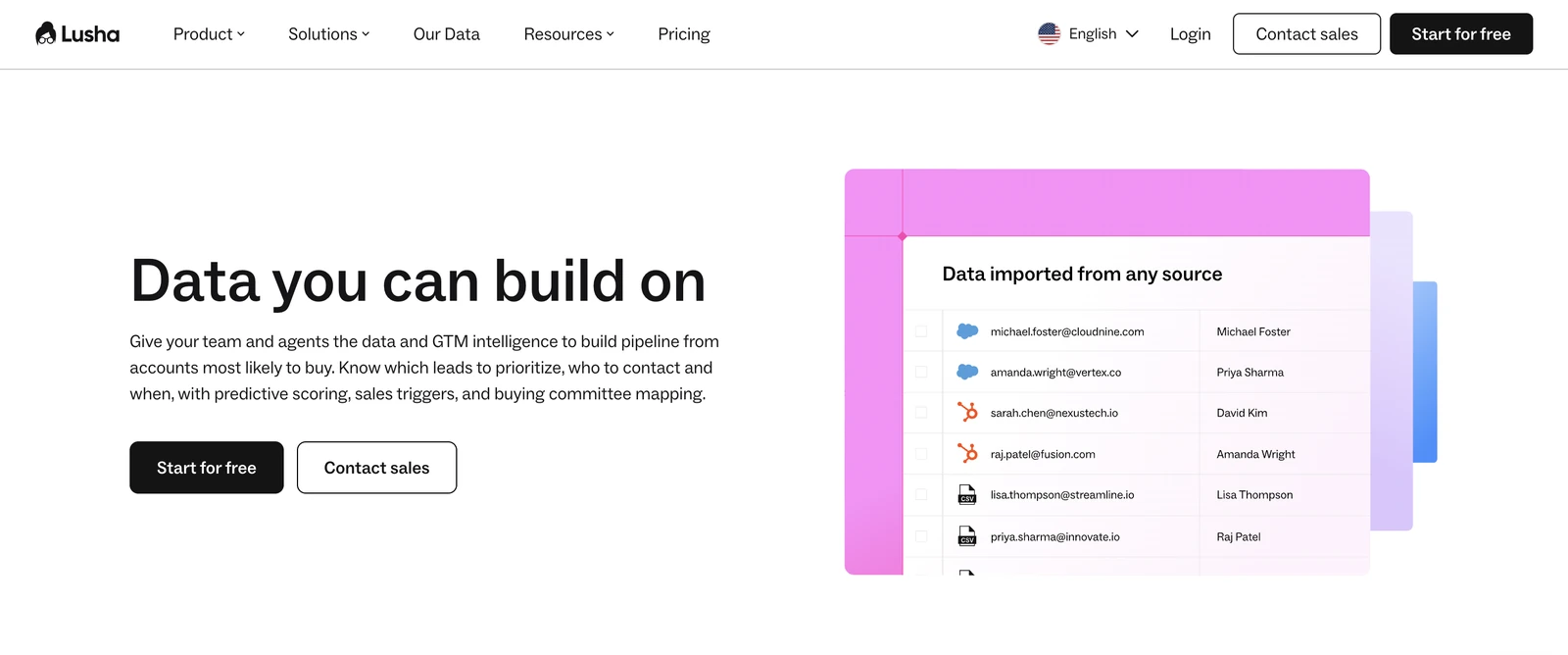
Best for reps who need a quick email or phone number without a big rollout.
Lusha works mostly through a browser extension. The free plan includes 40 credits a month, where a verified email costs 1 credit and a phone number costs 5.
That credit math adds up fast if your team calls a lot. Lusha also asks teams larger than five users to talk to sales.
LinkedIn Sales Navigator
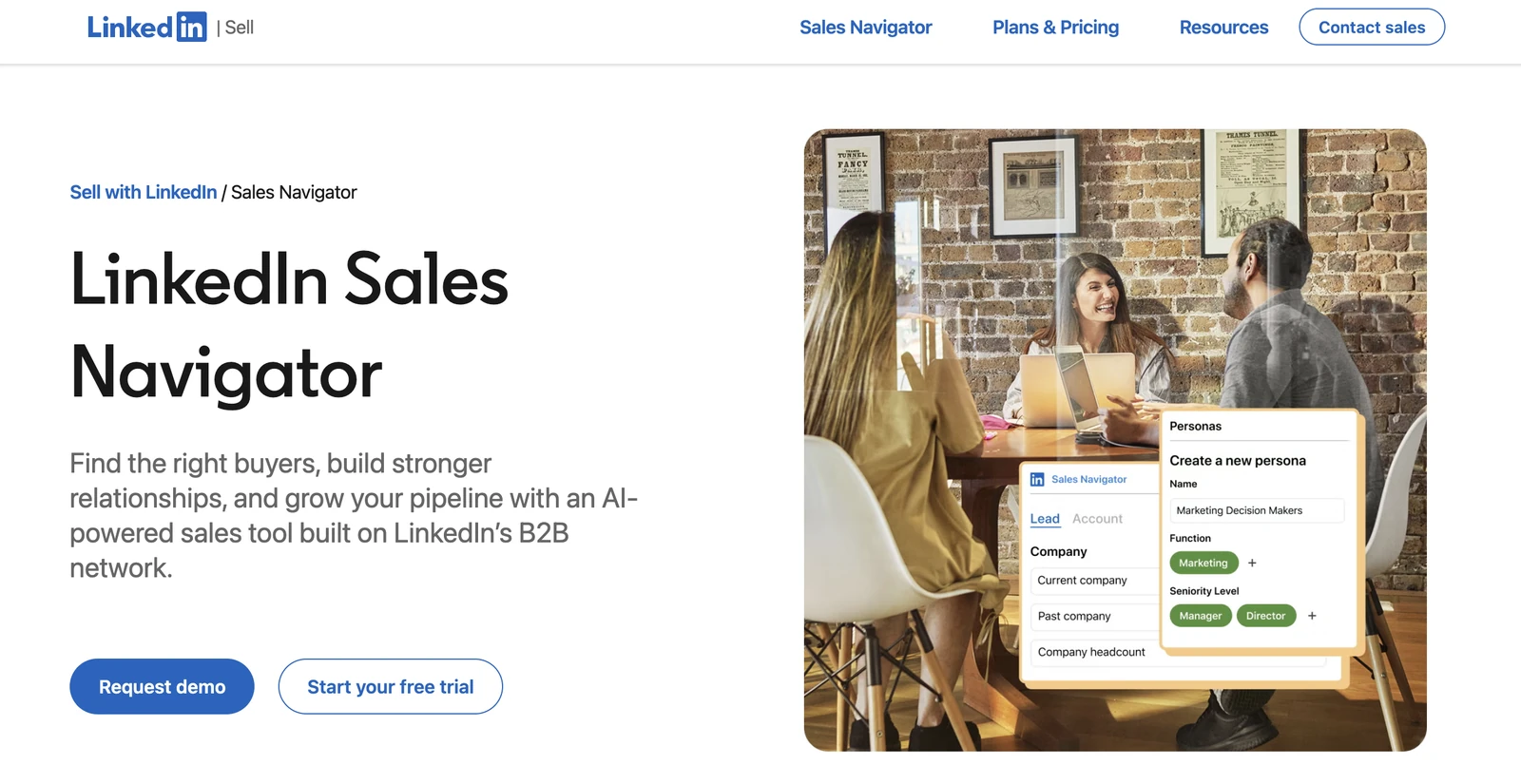
Best for relationship-led selling, where who you know matters as much as the account.
Sales Navigator works on LinkedIn's own member data. Core starts at $119.99 a month and Advanced at $159.99, with Advanced adding buyer intent signals and AI research on accounts and leads.
It won't hand you a list of verified emails and phone numbers to export, so most teams pair it with a data provider from this layer.
The second layer is intent and account signals. These tools tell you which accounts look like they're in the market right now, based on research activity, website visits and other behavior.
6sense
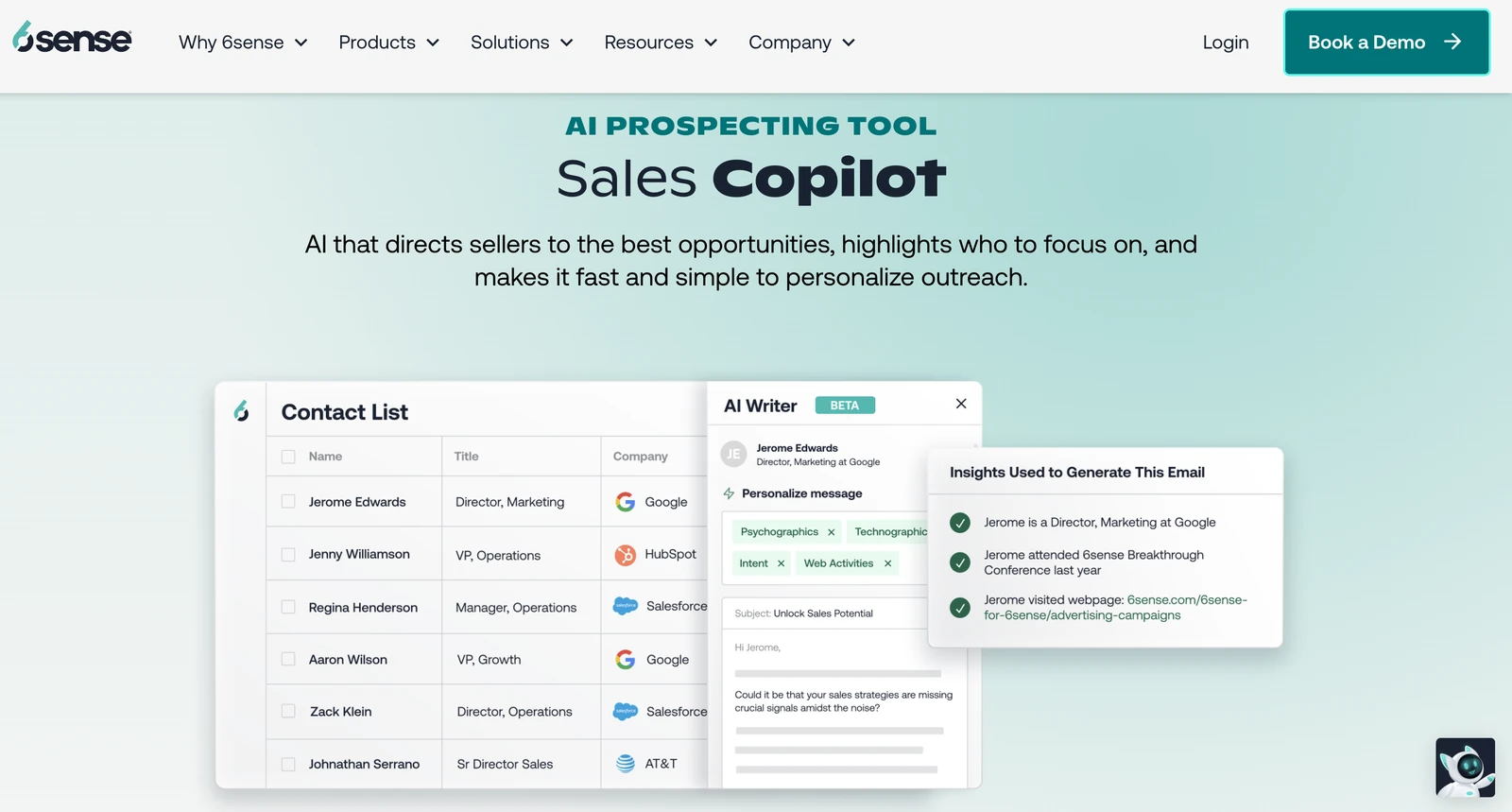
Best for teams that want a model to predict which accounts are close to buying.
6sense combines third-party intent with predictive AI scores and recommended next actions, plus a sales intelligence layer with technographics and job postings.
Pricing isn't published, and the predictive tiers are where most of the value sits. Expect a proper setup project before the scores are worth trusting.
Demandbase
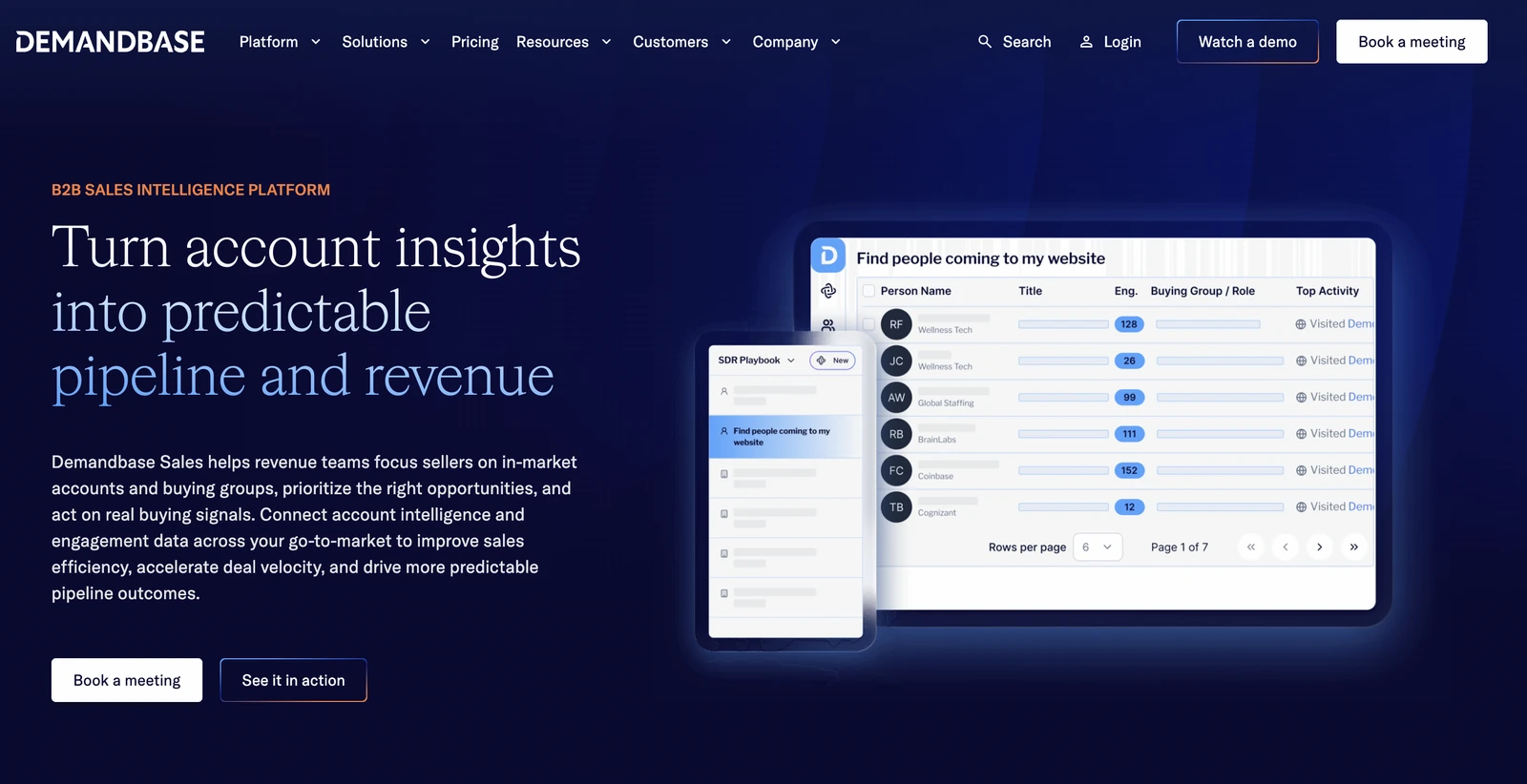
Best for teams where sales and marketing run account-based programs together.
Demandbase is priced as a platform fee plus a flat fee per user, with ABM and advertising for sales and marketing in one product.
It doesn't sell a standalone sales product. If only your sales team needs signals, you'll be paying for a platform built for both teams.
Bombora
Best for teams that want third-party intent data to feed other tools.
Bombora measures research activity across a co-op of thousands of B2B media sites and tracks more than 25,300 intent topics. Many teams use its data inside another platform rather than on its own.
Its signals are at the account level, so you still need contact data from elsewhere to know who to reach.
Common Room
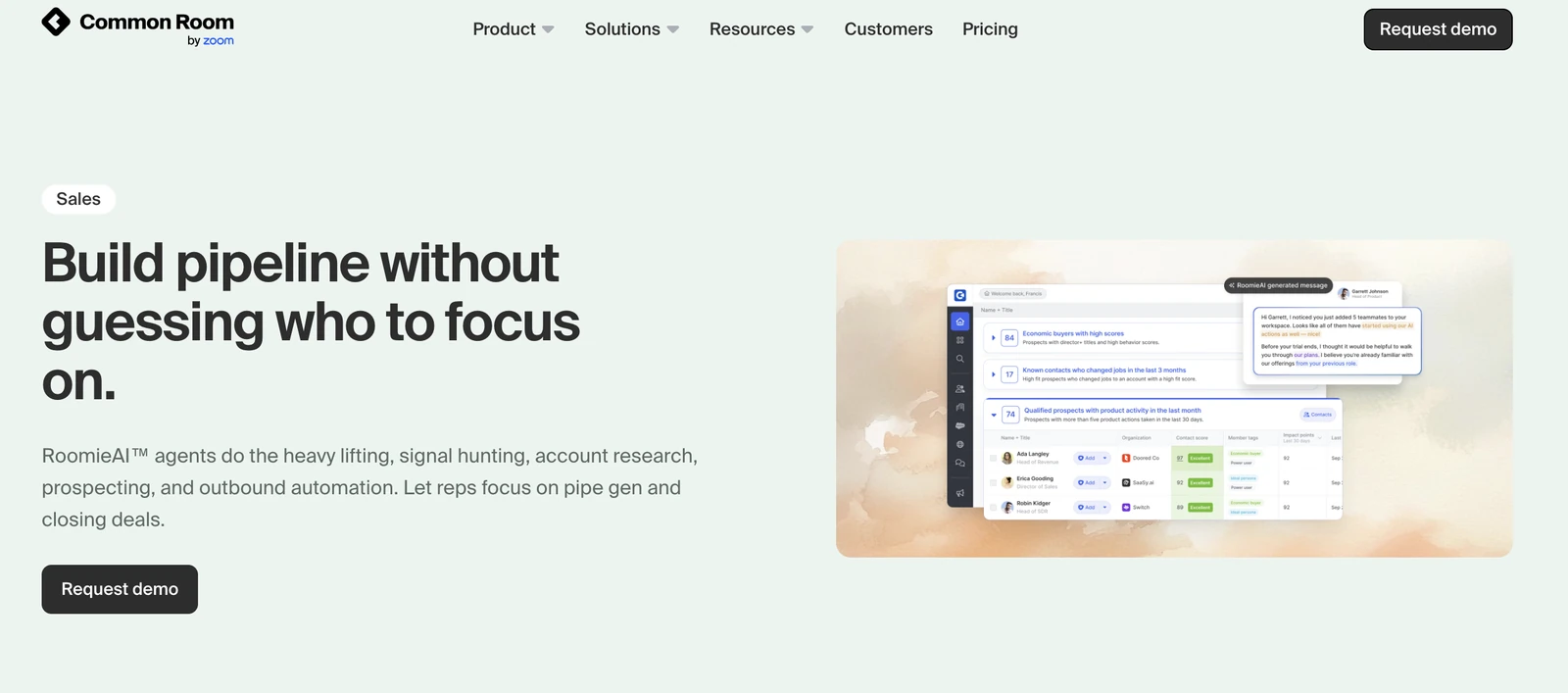
Best for teams that want person-level signals from many sources in one place.
Common Room pulls signals from places like your website and product usage, then ties them to people and accounts. The Essential plan is $2,500 a month billed annually and includes five seats.
That price point puts it out of reach for most small teams, and it does the most good once you already have several signal sources to connect.
The third layer is enrichment and workflow. These tools take data from other sources and shape it into something your reps can use, inside the systems they already work in.
Clay
Best for ops and growth teams that want to build their own enrichment workflows.
Clay lets you pull data from multiple providers into one table and run research steps on each row. The free plan includes 100 data credits a month, and paid plans scale by actions and credits.
It's a builder's tool. You'll get the most from it with someone on the team who enjoys setting up workflows.
HubSpot Sales Hub
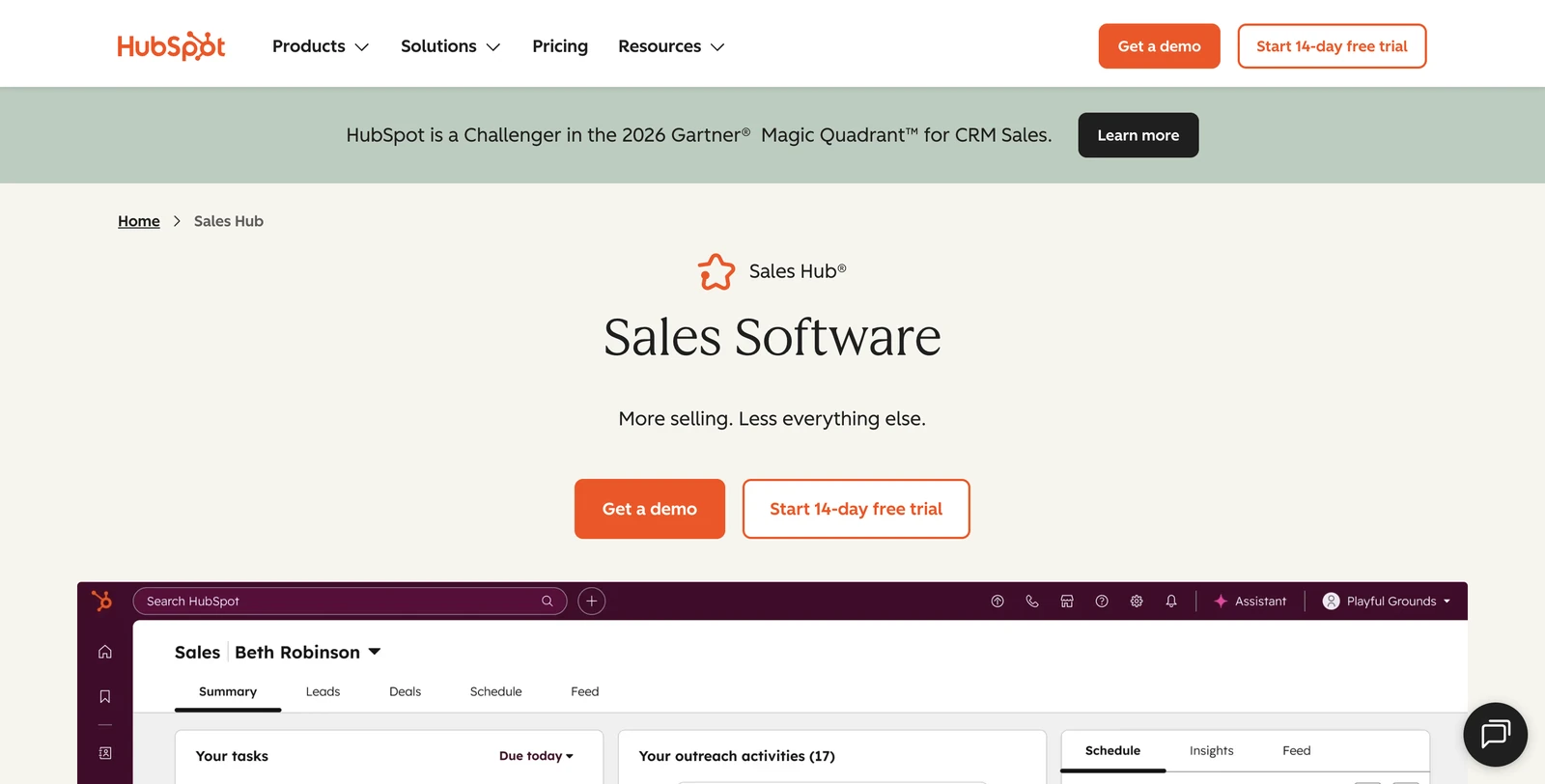
Best for teams already running HubSpot as their CRM.
Sales Hub keeps prospecting inside the CRM, with AI agents that research leads and track buying signals using HubSpot Credits. Professional starts at $90 a seat a month, plus a $1,500 onboarding fee.
It makes far less sense if your CRM is Salesforce, since the main appeal is keeping everything in HubSpot.
The fourth layer is deal and conversation intelligence. Most sales intelligence stops once a meeting is booked, and this layer covers what happens next, from call recordings to the forecast. (We compared these tools in more depth in our guide to deal intelligence software.)
MaxIQ
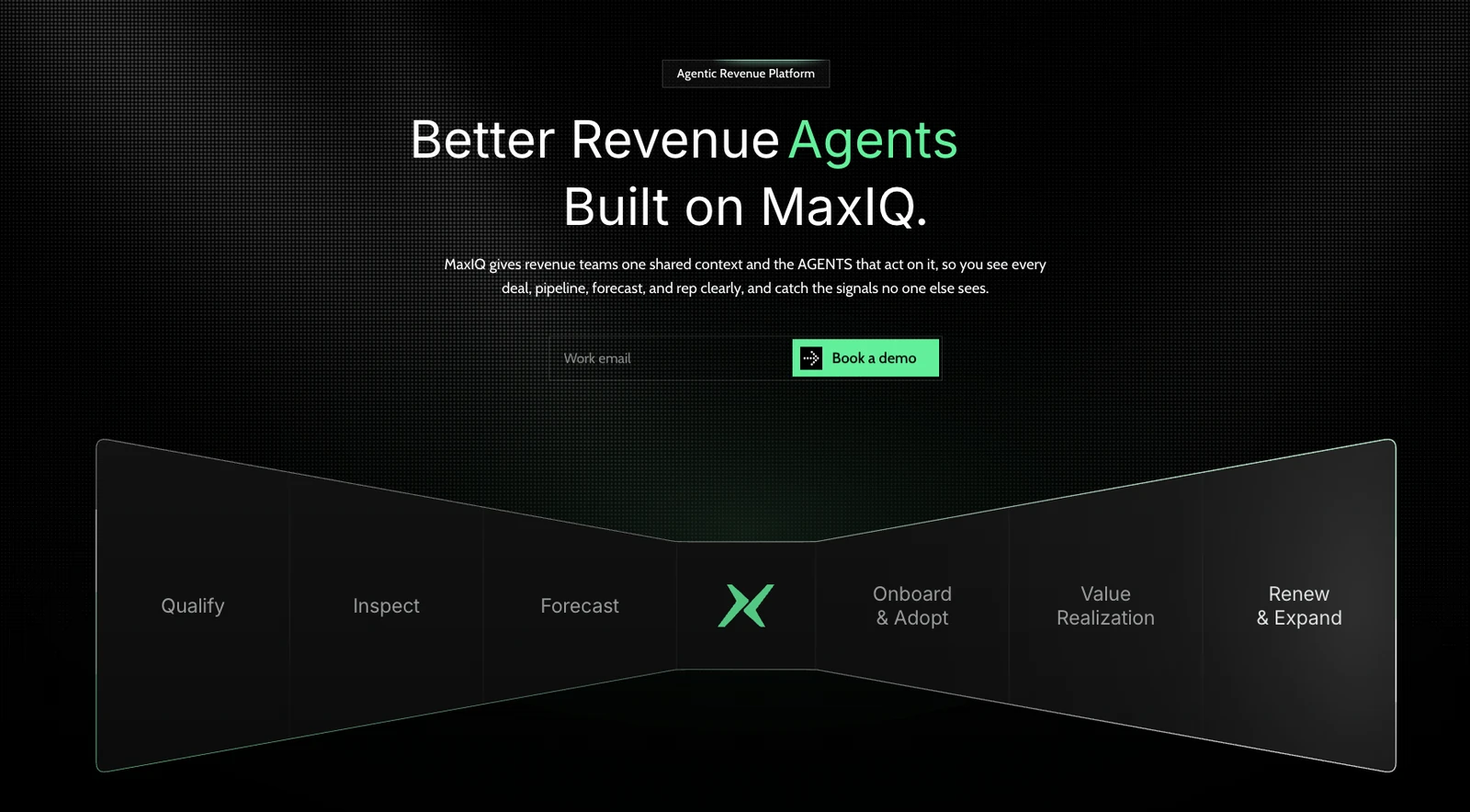
Best for Salesforce teams that want call insights and deal signals feeding one forecast. Basically, it combines both Gong and Clari + Salesloft in one tool.
MaxIQ covers the deal layer. InspectIQ flags deal risk and EchoIQ records and analyzes calls. ForecastIQ then rolls both into a forecast that covers renewals and expansion as well as new business. (If you're weighing this against a two-tool setup, here's how to choose between Clari, Gong and an all-in-one platform.)
MaxIQ doesn't sell contact data, and it runs on Salesforce only. You'd pair it with a tool from the first layer for prospecting.
If you're an enterprise or a small team just starting out, pick one tool from the first layer that includes outreach, like Apollo, and add the other layers as your pipeline grows.
Gong
Best for teams that want call recording and rep coaching in one tool.
Gong records and analyzes customer calls, then surfaces deal health from what was said. Pricing is per-user licenses plus a platform fee, quoted on request.
Forecasting is sold as a separate product, so a team that wants both coaching and a forecast pays for two modules.
Clari + Salesloft
Best for larger revenue teams that want forecasting and sales engagement from one vendor.
Clari and Salesloft merged in December 2025 and now sell under the Salesloft brand. The combined Predictive Revenue System includes Clari Forecast, Cadence for outreach, conversation intelligence and pipeline inspection.
The company says product integration is still in progress, so check which pieces work together today before you sign.
The data it runs on
Every platform in that list is built on some mix of the same data. It's worth knowing the types, because "sales intelligence" can mean any of them depending on who's selling it.
Four kinds do most of the work:
- Firmographic and technographic data. Company size, industry, location and revenue, plus the software a company already uses. This is how you build a list that matches your ideal customer profile.
- Contact data. Names, titles, emails, direct dials and LinkedIn profiles for the people inside those companies.
- Intent and trigger events. Research activity, website visits, funding rounds, leadership changes and new job postings that suggest an account is ready to talk. (Here's a short primer on buyer intent.)
- Deal and conversation data. What happens once an account is in your pipeline: emails, meetings, call recordings and how the deal has moved since it opened.
The first three come mostly from outside your company. The last one comes from inside it, which is why no outside database can supply it.
Deal and conversation data is where you spot a close date that keeps slipping, or a pricing objection a buyer raised on the last call. We've written up six of those deal signals, and what a forecast built on conversation data looks like in practice.
All of this data goes stale. People change jobs and companies get acquired. The median US worker has been with their current employer for 4.1 years, according to the Bureau of Labor Statistics. On a list of 5,000 contacts, that means somebody moves on nearly every day, so ask any vendor how often they re-verify records.
Who uses it, and for what
Sales intelligence started out as an SDR tool. These days most of the revenue team uses it, each person for a different job:
- SDRs. Build target lists and time outreach to trigger events like a new funding round.
- AEs. Research an account before a first call and map who's on the buying committee.
- Sales managers. See which accounts and deals need attention this week, and coach reps on the ones that have stalled.
- RevOps. Define the ideal customer profile and keep CRM data clean enough for everyone else to trust.
Getting the right data in front of each of those people is where the payoff shows up. In a Gartner survey of 227 chief sales officers, sales organizations that give sellers AI-enabled next best actions were 2.6 times more likely to achieve commercial growth.
Each role needs that data at a different point in the deal, though. SDRs need it before the first touch. Managers need it most once deals are open, which is exactly where contact databases have the least to offer, and where sales intelligence starts to overlap with other tools you may already own.
How it compares with CRM, revenue intelligence and conversation intelligence
These four get mixed up a lot, partly because vendors stretch the labels to cover more ground. The easiest way to tell them apart is by the question each one answers.
Put together, they follow a deal from start to finish. Sales intelligence brings in accounts you don't have yet, and the CRM keeps the record once they're in. Conversation intelligence adds what was said on calls, and revenue intelligence combines all of it to show where the quarter is heading.
The lines blur because more products now span two of these. Apollo pairs a contact database with outreach, and HubSpot builds prospecting into its CRM. On the deal side, Gong adds forecasting to its call recording, and MaxIQ puts calls and forecasting on one data model inside Salesforce.
Most teams end up with a CRM plus one or two of the others. My recommendation: work out which question you most need answered this quarter, and buy for that one first.
How to choose a sales intelligence platform
Most feature lists look the same by the third demo. Every vendor will show you a big database and a CRM integration. What separates them is how well that data fits your market, and whether your reps actually use it.
Four steps will get you to a confident decision:
- Start from your gap. Work out whether your team struggles to find the right people, or to see what's happening once they're in the pipeline. The first points you to the data and signal layers, the second to the deal layer.
- Test the data on accounts you know. Pick 50 accounts your team knows well and check the vendor's titles and emails against what you already know. Coverage of your ICP matters far more than the headline database size.
- Check the CRM fit. Look at how fields map, whether sync runs both ways, how duplicates are handled, and who can see what.
- Run a short pilot. Give it 30 to 60 days with a few reps, and write down your exit criteria before it starts.
During the pilot, watch two numbers above everything else: meetings booked per rep, and how many alerts reps actually acted on. The second one tells you more than any demo will.
The time savings add up quickly. If a rep spends five hours a week on account research and a tool cuts that in half, that's roughly 120 hours a year back for selling, per rep.
If adoption is still low after 30 days, the data probably doesn't match how your reps work. Go back to the gap you started from before you plan more training.
What it costs, and what to check on privacy
Once you know which layer you need, look at how each vendor charges. Two tools with similar list prices can end up costing very different amounts once your whole team is using them.
Most vendors charge in one of four ways:
- Per seat. A fixed monthly price for each user, like LinkedIn Sales Navigator at $119.99 a month or HubSpot Sales Hub Professional at $90 a seat.
- Credits. You pay for what you pull. On Lusha a verified email costs 1 credit and a phone number costs 5, and ZoomInfo uses a credit for every export.
- Platform fee plus users. A base fee for the product, then a charge for each person on it. Demandbase and Gong both price this way.
- Flat plan. One price that includes a set number of seats, like Common Room's $2,500 a month for five.
Credits are the model to do the math on before you sign. Say a rep pulls 20 phone numbers a week on Lusha. At 5 credits each, that's about 400 credits a month, ten times what the free plan includes.
Apollo and Clay both have free plans too, which makes them a cheap way to run the 50-account test from the last section.
Privacy is the other thing to check, especially if you sell into Europe. Most B2B prospecting under GDPR relies on legitimate interest, and the regulation itself says direct marketing "may be regarded as carried out for a legitimate interest". People keep the right to object at any time, though, and once they do, their data can't be used for marketing again.
So ask every vendor where its data comes from and how it tells people it holds their details. Then ask how opt-outs travel. If someone objects through the vendor, that needs to reach your CRM and your sequencing tool as well, or a rep may email them again next month. It's worth running your shortlist past whoever handles privacy at your company before you sign.
Where MaxIQ fits
MaxIQ sits in the fourth layer. It doesn't sell contact data, so it won't replace the tools that fill your pipeline. It's built for what happens once deals are open, using the Salesforce data you already have.
Four parts of MaxIQ do that work:
- InspectIQ. Checks every open deal for risk signals and flags the ones that need attention, like Helios.
- EchoIQ. Records and analyzes sales calls, so what the buyer said sits next to the deal record.
- ForecastIQ. Rolls deal and call data into the forecast, including renewal and expansion revenue.
- Salesforce underneath. Everything runs on your existing Salesforce data, so reps don't have a second system to update. (Here's more on why an AI layer on top of Salesforce makes sense.)
Mike Wing, President at VAST Data, says the team improved forecast accuracy by 15% with real-time insights and automated data capture.
Every capability walked through one by one, with screenshots from real calls.
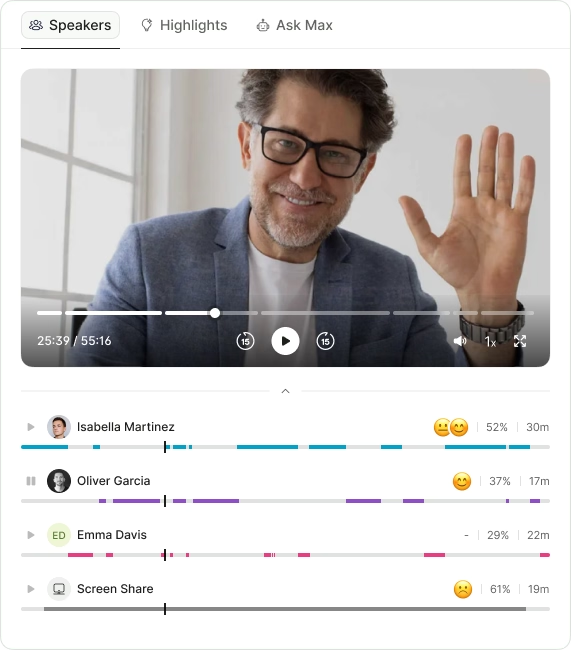
- Call summaries
- Sentiment analysis
- Next steps
- Search any call in seconds